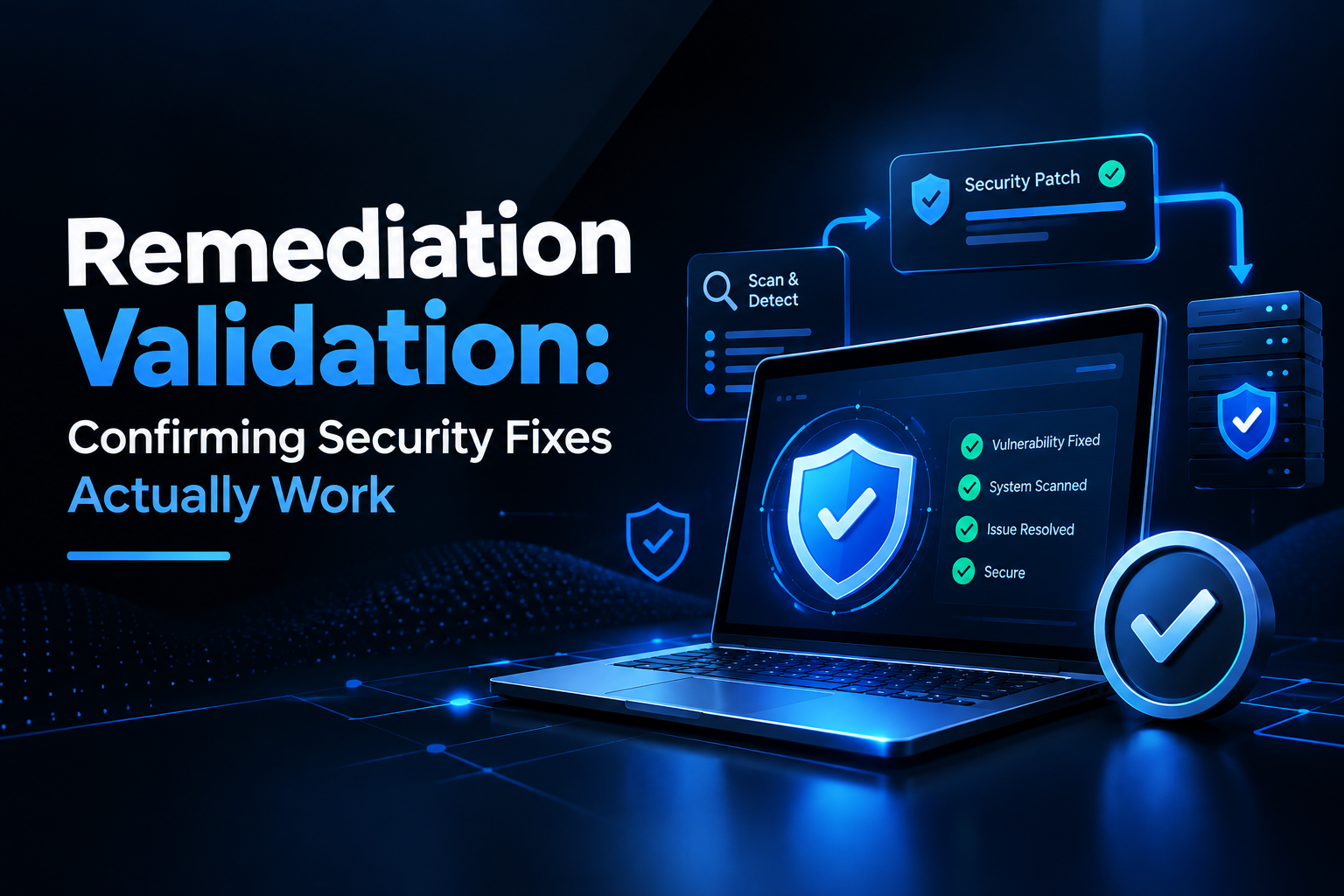
Remediation Validation: Confirming Security Fixes Actually Work
Identifying a security vulnerability is only the first step toward improving an organization's security posture. After a vulnerability has been reported, the next important step is remediation. However, applying a patch, changing a configuration, or modifying application code does not automatically prove that the original security issue has been resolved.Remediation validation is the process of retesting a previously identified vulnerability after corrective action has been implemented. It helps security teams confirm whether the original weakness is no longer detectable under the relevant test conditions. OWASP vulnerability management guidance similarly emphasizes that remediation should be followed by testing rather than simply assuming that a finding has been resolved.For organizations looking for professional vulnerability assessment and penetration testing support, https://www.rashicore.com/vapt.php provides information about VAPT services, including automated scanning, manual penetration testing, exploitation and validation, and reporting.What Is Remediation Validation?Remediation validation is a follow-up security assessment performed after a vulnerability has been addressed. The objective is to determine whether the specific weakness identified during the original assessment is still present.Depending on the vulnerability, validation may involve:A targeted vulnerability rescanManual security testingApplication testingConfiguration verificationCode-level testingRepeating the original proof-of-conceptRegression testingThe validation method should match the original vulnerability and the remediation that was applied.Why Security Fixes Need to Be RetestedA vulnerability can remain present even after a remediation task has been marked as completed. A patch may have been applied to the wrong system, a configuration change may have been incomplete, or a code fix may address only one variation of the original weakness.OWASP describes verification as an important part of secure development and vulnerability management, including automated security testing, manual testing, penetration testing, and security control verification.Retesting therefore provides evidence that the corrective action changed the security condition that originally produced the finding.1. Review the Original VulnerabilityBefore beginning validation, security teams should review the original finding carefully.Important information can include:Vulnerability nameAffected assetAffected URL or endpointSeverityEvidence from the original assessmentExploitation or detection methodRoot causeRecommended remediationOriginal test conditionsThis information creates a baseline against which the new result can be compared.2. Confirm the Remediation AppliedThe next step is to understand what corrective action was implemented.Depending on the finding, remediation could involve:Installing a security patchUpdating a software versionChanging server configurationCorrecting access permissionsModifying application codeRemoving an insecure componentStrengthening authentication controlsImplementing a compensating security controlThe validation process should confirm that the change was applied to the affected environment rather than assuming that a reported change was successfully deployed everywhere.3. Reproduce the Original FindingWhenever possible, the validation test should follow the same general path used to identify the vulnerability.This creates a meaningful comparison between the original and current results.For example, if an application vulnerability was originally identified through a specific endpoint and input condition, the tester can assess that same endpoint and condition after remediation.This approach helps determine whether the original exposure has actually changed.4. Perform a Targeted RescanA targeted rescan can be useful for vulnerabilities that were originally detected through automated security scanning.The security team can scan the affected asset again and compare the result with the original finding.However, a clean scan should be interpreted carefully. A scanner's non-detection indicates that the specific vulnerability was not detected under the conditions of that test; it does not by itself guarantee that every related weakness has been eliminated.5. Conduct Manual Retesting When NecessaryAutomated scanning cannot always verify complex application behavior, business logic, authentication controls, or configuration interactions.Manual testing can therefore be valuable when the original finding required human analysis or exploitation validation.For VAPT engagements, combining automated assessment with manual penetration testing can provide broader validation coverage. Rashicore's VAPT approach includes automated vulnerability scanning, manual penetration testing, exploitation and validation, and detailed reporting.Organizations can explore these VAPT capabilities at https://www.rashicore.com/vapt.php.How Remediation Validation Supports VAPTVulnerability Assessment and Penetration Testing is not limited to finding security weaknesses. A complete security process also includes understanding the finding, supporting remediation, and validating whether corrective actions address the identified exposure.Rashicore's VAPT services describe an approach that includes vulnerability scanning, manual penetration testing, exploitation and validation, and detailed reporting.Businesses can learn more about VAPT and security assessment services through https://www.rashicore.com/vapt.php.ConclusionRemediation should not be considered complete simply because a patch has been installed or a configuration has been changed. Security teams need evidence that the corrective action addressed the original vulnerability under relevant testing conditions.Remediation validation provides this important verification step through targeted rescanning, manual retesting, regression testing, evidence collection, and clear status reporting. When integrated into the wider VAPT and vulnerability management lifecycle, validation helps organizations maintain a more accurate understanding of their security posture.For professional vulnerability assessment, penetration testing, exploitation validation, and security reporting, explore https://www.rashicore.com/vapt.php.
Read More →



























































 UK
UK
 USA
USA
 UAE
UAE
 Canada
 Australia
 Germany
 Singapore
 Netherlands