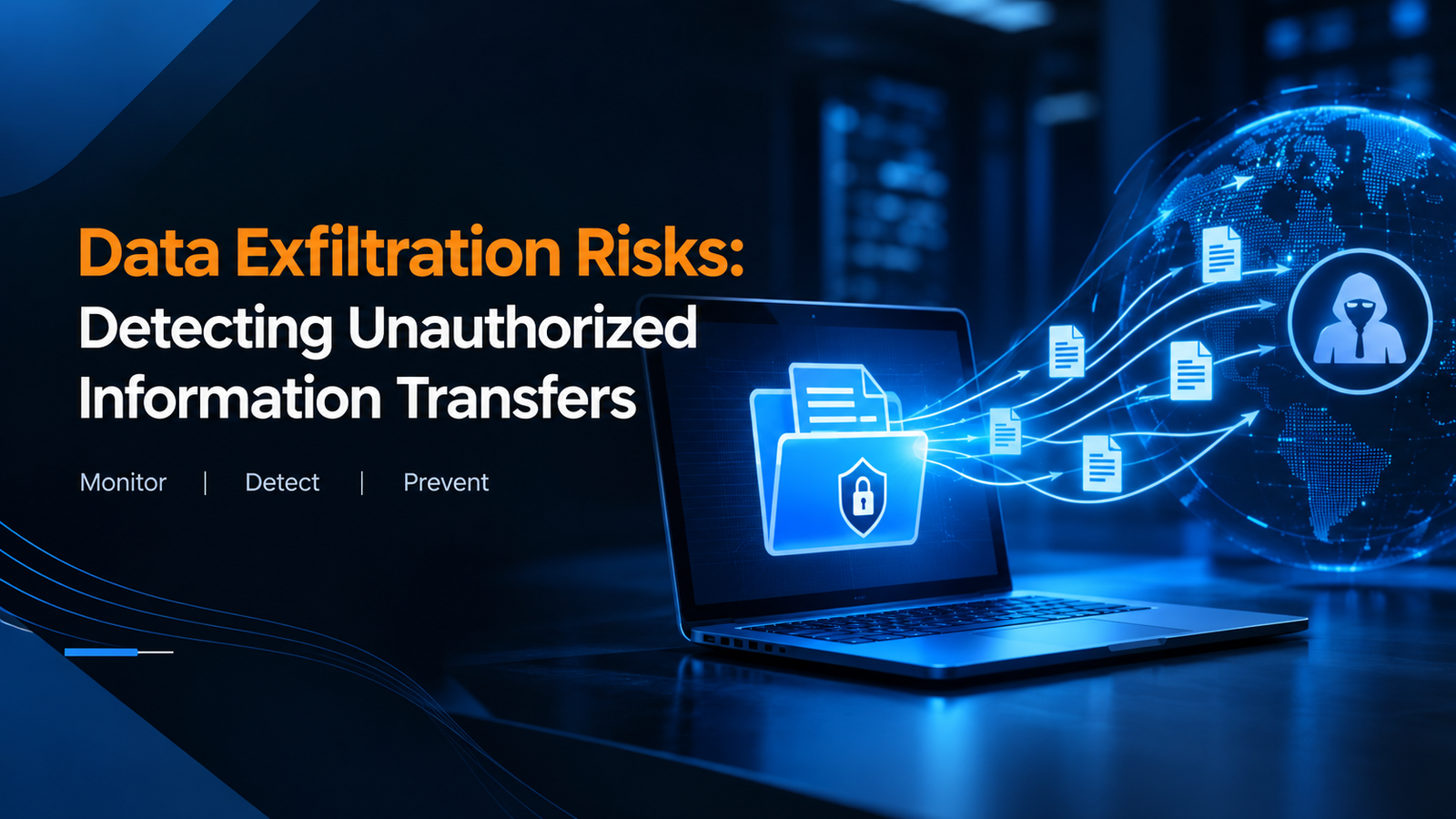
Data Exfiltration Risks: Detecting Unauthorized Information Transfers
Introduction
Data is one of the most valuable assets for modern businesses. However, sensitive information can be secretly transferred from an organization’s systems by cybercriminals, compromised accounts, malicious insiders, or infected devices. This process is known as data exfiltration.
Unauthorized data transfers can expose customer records, financial information, intellectual property, employee details, and confidential business documents. Organizations therefore need strong monitoring and data breach prevention strategies to identify suspicious transfers before they result in major damage.
What Is Data Exfiltration?
Data exfiltration occurs when sensitive information is moved from an organization’s authorized environment to an unauthorized external location.
Attackers may use compromised credentials, malware, cloud applications, removable devices, email accounts, or unauthorized network connections to transfer valuable information.
Common examples include:
- Customer database theft
- Unauthorized file downloads
- Sensitive information sent through personal email
- Large transfers to unknown external servers
- Confidential files copied to removable devices
- Data stolen through compromised cloud accounts
How Businesses Can Detect Data Exfiltration
Effective detection requires multiple layers of security controls. Organizations can use network monitoring, endpoint security, access logs, security information and event management (SIEM), and data loss prevention (DLP) technologies to identify suspicious behavior.
Regular backups are equally important. Even when preventive controls fail, secure backup and recovery processes can help organizations restore critical information and maintain business continuity. Rashicore provides Data Protection & Disaster Recovery solutions covering automated backup, rapid recovery, disaster recovery planning, and business continuity management. Visit https://www.rashicore.com/data-protection.php to learn more.
Best Practices to Reduce Data Exfiltration Risks
Businesses can strengthen their defenses by:
- Monitoring outbound network traffic
- Implementing Data Loss Prevention (DLP)
- Applying least-privilege access controls
- Using multi-factor authentication
- Encrypting sensitive information
Organizations should combine preventive controls with reliable recovery measures. Data protection and disaster recovery can help reduce the impact of information loss and support faster recovery after security incidents.
For organizations looking to strengthen backup, recovery, and business continuity capabilities, explore Rashicore's Data Protection service at https://www.rashicore.com/data-protection.php.
Conclusion
Data exfiltration can remain difficult to detect when attackers attempt to make unauthorized transfers appear like normal activity. Continuous monitoring, strong access controls, encryption, DLP solutions, and security awareness can help businesses identify suspicious behavior earlier.
A comprehensive cybersecurity strategy should also include reliable backup and recovery capabilities. By combining proactive monitoring with effective data protection and disaster recovery, organizations can reduce the risk of data breaches and improve their ability to recover from security incidents.
Businesses can strengthen their overall resilience with professional Data Protection & Disaster Recovery solutions from Rashicore: https://www.rashicore.com/data-protection.php.
 UK
UK
 USA
USA
 UAE
UAE
 Canada
 Australia
 Germany
 Singapore
 Netherlands