Cyber Security Articles

Latest Insights, Threat Reports & Security Updates

Latest Articles

Stay updated with cybersecurity knowledge

Cyber Risk Management
Cyber Risk Management: Strategies for Modern Businesses
IntroductionAs businesses increasingly depend on cloud services, remote work, and digital platforms, cyber risks are growing rapidly. Threats such as phishing, ransomware, data breaches, and insider attacks can cause financial and reputational damage.Cyber risk management helps businesses identify, assess, and reduce cybersecurity risks before they become major incidents.Key Cyber Risk Management Strategies1. Conduct Regular Risk AssessmentsRegularly identify vulnerabilities across networks, applications, devices, and cloud systems. Prioritize risks based on their potential business impact.2. Protect Critical DataUse encryption, secure backups, access controls, and strong authentication to protect sensitive business and customer information.3. Implement Multi-Factor AuthenticationMFA adds an extra layer of security and helps prevent unauthorized access even when passwords are compromised.4. Secure EndpointsKeep computers, smartphones, and other devices updated and protected with endpoint security solutions.5. Manage Third-Party RisksEvaluate vendors and service providers to ensure they follow appropriate cybersecurity practices and do not introduce unnecessary risks.6. Train EmployeesRegular cybersecurity awareness training can help employees recognize phishing, social engineering, suspicious links, and other common threats.7. Prepare an Incident Response PlanA clear response plan helps businesses quickly detect, contain, and recover from cyber incidents while minimizing operational disruption.8. Continuously Monitor RisksCyber threats constantly evolve, so businesses should continuously monitor systems, vulnerabilities, and unusual activities.ConclusionEffective cyber risk management is essential for protecting modern businesses from evolving cyber threats. By assessing risks, securing data and systems, training employees, managing third-party risks, and preparing for incidents, organizations can strengthen their cybersecurity and maintain business continuity.The goal is not to eliminate every cyber risk, but to understand, reduce, and manage risks effectively.
Aug 13, 2026
Read More →
Email Security
Email Security: Best Practices to Prevent Business Email Compromise
IntroductionEmail is an essential communication tool for businesses, but it is also a common target for cybercriminals. Business Email Compromise (BEC) occurs when attackers impersonate executives, employees, or vendors to trick businesses into making payments, sharing sensitive information, or revealing credentials.A strong email security strategy can significantly reduce these risks.What Is Business Email Compromise?BEC is a social engineering attack where criminals use fake or compromised email accounts to appear trustworthy. Common examples include:Fake payment or invoice requestsExecutive impersonationVendor bank-account change requestsCredential theftRequests for confidential informationBest Practices to Prevent BEC1. Enable Multi-Factor AuthenticationUse MFA for business email accounts and other critical applications. It provides an additional layer of protection even if a password is stolen.2. Use Strong, Unique PasswordsEmployees should use strong passwords and avoid reusing the same password across different accounts. Password managers can help manage secure credentials.3. Implement SPF, DKIM, and DMARCThese email authentication technologies help protect business domains from spoofing and unauthorized email activity.SPF identifies authorized sending servers.DKIM verifies email authenticity.DMARC helps organizations manage unauthenticated emails.4. Verify Financial RequestsNever rely only on email for payment or bank-account changes. Independently verify unusual financial requests using a trusted phone number or another established communication channel.5. Train EmployeesRegular security awareness training can help employees identify phishing emails, suspicious links, fake domains, urgent requests, and unusual attachments.6. Monitor Email AccountsOrganizations should monitor unusual login activity, suspicious forwarding rules, unexpected password changes, and abnormal email-sending behavior.7. Avoid Suspicious Links and AttachmentsEmployees should avoid opening unexpected attachments or clicking unfamiliar links. Email security solutions can also help detect malicious content.8. Create an Incident Response PlanBusinesses should have a clear process for reporting and responding to compromised accounts. Quick action can help limit financial and data losses.ConclusionPreventing Business Email Compromise requires more than just email filtering. MFA, strong passwords, SPF/DKIM/DMARC, employee training, account monitoring, and payment verification should work together as part of a layered email security strategy.
Aug 12, 2026
Read More →
Supply Chain Security
Supply Chain Security: Protecting Against Third-Party Risk
 IntroductionModern businesses depend on suppliers, vendors, contractors, cloud providers, and technology partners. While these third parties improve business efficiency, they can also introduce cybersecurity risks. A security weakness in one partner can become an entry point for attackers into an organization’s systems and data.What Is Supply Chain Security?Supply chain security involves protecting an organization from cyber and operational risks introduced by its third-party partners. It includes managing vendors, monitoring access, protecting data, and ensuring that external providers follow appropriate security practices.Common Third-Party RisksOrganizations may face several risks through their vendors, including:Unauthorized access to systems and dataData breaches and information leaksMalware and ransomware attacksSoftware supply chain attacksBusiness and service disruptionsHow to Reduce Third-Party Risk1. Assess VendorsBefore working with a vendor, review its security policies, data protection practices, access controls, and incident response capabilities.2. Limit AccessFollow the principle of least privilege by giving third parties only the access they need. Multi-factor authentication can provide additional protection.3. Monitor Vendor ActivityRegularly monitor third-party access, security events, vulnerabilities, and changes in risk. Vendor reviews should continue throughout the relationship.4. Set Clear Security RequirementsContracts should clearly define requirements for data protection, incident reporting, security controls, and compliance.5. Prepare for IncidentsOrganizations should have an incident response plan for vendor-related security incidents, including procedures for isolating systems, investigating breaches, and restoring services.ConclusionThird-party relationships are essential to modern business, but they can also increase the cybersecurity attack surface. By assessing vendors, limiting access, monitoring activity, and establishing strong security requirements, organizations can reduce third-party risks and build a more resilient supply chain.Effective supply chain security protects the organization, its partners, and its customers from evolving cyber threats.
Aug 11, 2026
Read More →
Security Compliance
Security Compliance: A Complete Guide to Cybersecurity Compliance Standards
IntroductionIn today’s digital landscape, businesses handle large amounts of sensitive information, making security compliance an essential part of cybersecurity. Security compliance helps organizations protect data, reduce cyber risks, and meet industry and regulatory requirements.What Is Security Compliance?Security compliance is the process of following established cybersecurity laws, regulations, standards, and security requirements. It includes practices such as data protection, access control, risk management, security monitoring, vulnerability management, and incident response.Why Is Security Compliance Important?A strong compliance strategy helps organizations:Protect sensitive business and customer dataReduce cybersecurity risksMeet regulatory and industry requirementsImprove security processesBuild customer trustRespond effectively to security incidentsMajor Cybersecurity Compliance StandardsISO 27001ISO/IEC 27001 provides a structured framework for managing information security through an Information Security Management System (ISMS). It focuses on risk management, access control, data protection, and continuous improvement.SOC 2SOC 2 is commonly used by technology and service organizations to demonstrate effective controls for protecting customer information. It focuses on areas such as security, availability, confidentiality, and privacy.PCI DSSPCI DSS applies to organizations that process, store, or transmit payment card information. It provides requirements for protecting cardholder data and reducing payment-related security risks.HIPAAHIPAA establishes security and privacy requirements for protected health information in the United States. It helps healthcare organizations safeguard sensitive patient information.GDPRGDPR focuses on protecting personal data and privacy. Organizations handling applicable personal data must implement appropriate security measures and follow data protection principles.NIST Cybersecurity FrameworkThe NIST Cybersecurity Framework helps organizations manage cybersecurity risks through five key functions:Identify, Protect, Detect, Respond, and Recover.Key Elements of a Compliance ProgramAn effective security compliance program should include:Regular risk assessmentsStrong access controlsData encryption and protectionVulnerability managementSecurity monitoringIncident response plansEmployee security awareness trainingRegular audits and documentationHow to Maintain Security ComplianceOrganizations should first identify the regulations and standards that apply to their business. They can then assess existing security controls, identify gaps, implement necessary improvements, and regularly monitor their systems.Security policies should be reviewed periodically, employees should receive security training, and compliance controls should be tested regularly.ConclusionSecurity compliance is an ongoing process that supports both regulatory requirements and overall cybersecurity. Standards such as ISO 27001, SOC 2, PCI DSS, HIPAA, GDPR, and NIST provide organizations with structured approaches to protecting information and managing cyber risks.By maintaining strong security controls and continuously improving compliance processes, businesses can protect sensitive data, reduce vulnerabilities, and build greater trust with customers and partners
Aug 10, 2026
Read More →
Cyber Reseillence
Cyber Resilience: Building Cyber Resilience Against Modern Attacks
IntroductionCyberattacks are becoming more sophisticated, frequent, and difficult to predict. Ransomware, phishing, cloud vulnerabilities, and supply-chain attacks can disrupt business operations and expose sensitive data. This makes cyber resilience essential for modern organizations.What Is Cyber Resilience?Cyber resilience is an organization's ability to prepare for, withstand, respond to, and recover from cyberattacks while maintaining essential operations.It combines cybersecurity, continuous monitoring, incident response, backup and recovery, risk management, and employee awareness.Why Is Cyber Resilience Important?Traditional security measures cannot always prevent every cyberattack. A strong resilience strategy helps organizations:Reduce downtimeProtect critical dataDetect threats fasterRespond effectively to incidentsRecover affected systems quicklyMaintain business continuityCommon Modern Cyber ThreatsOrganizations today face several major threats, including:Ransomware: Disrupts systems and can compromise sensitive data.Phishing: Tricks users into revealing credentials or sensitive information.Cloud Attacks: Exploits misconfigurations, weak access controls, and insecure services.Supply Chain Attacks: Targets trusted vendors and third-party services.Advanced Threats: Uses sophisticated techniques to remain undetected.Key Steps to Build Cyber Resilience1. Identify RisksIdentify critical systems, sensitive data, vulnerabilities, and potential threats.2. Strengthen SecurityUse multi-factor authentication, access controls, encryption, endpoint security, network segmentation, and regular updates.3. Monitor ContinuouslyMonitor networks, applications, cloud environments, and user activity to detect suspicious behavior early.4. Prepare an Incident Response PlanDefine clear procedures for detecting, containing, responding to, and recovering from security incidents.5. Maintain Secure BackupsKeep reliable, protected backups and regularly test recovery procedures.6. Train EmployeesSecurity awareness training helps employees recognize phishing, social engineering, and other common threats.ConclusionCyber resilience is not just about preventing attacks—it is about being prepared when an attack occurs. By combining strong security controls, continuous monitoring, incident response, reliable backups, and employee awareness, organizations can reduce cyber risks and recover faster.A resilient organization is better prepared to protect its data, maintain operations, and adapt to the constantly changing cyber threat landscape.
Aug 08, 2026
Read More →
Web Application Firewall
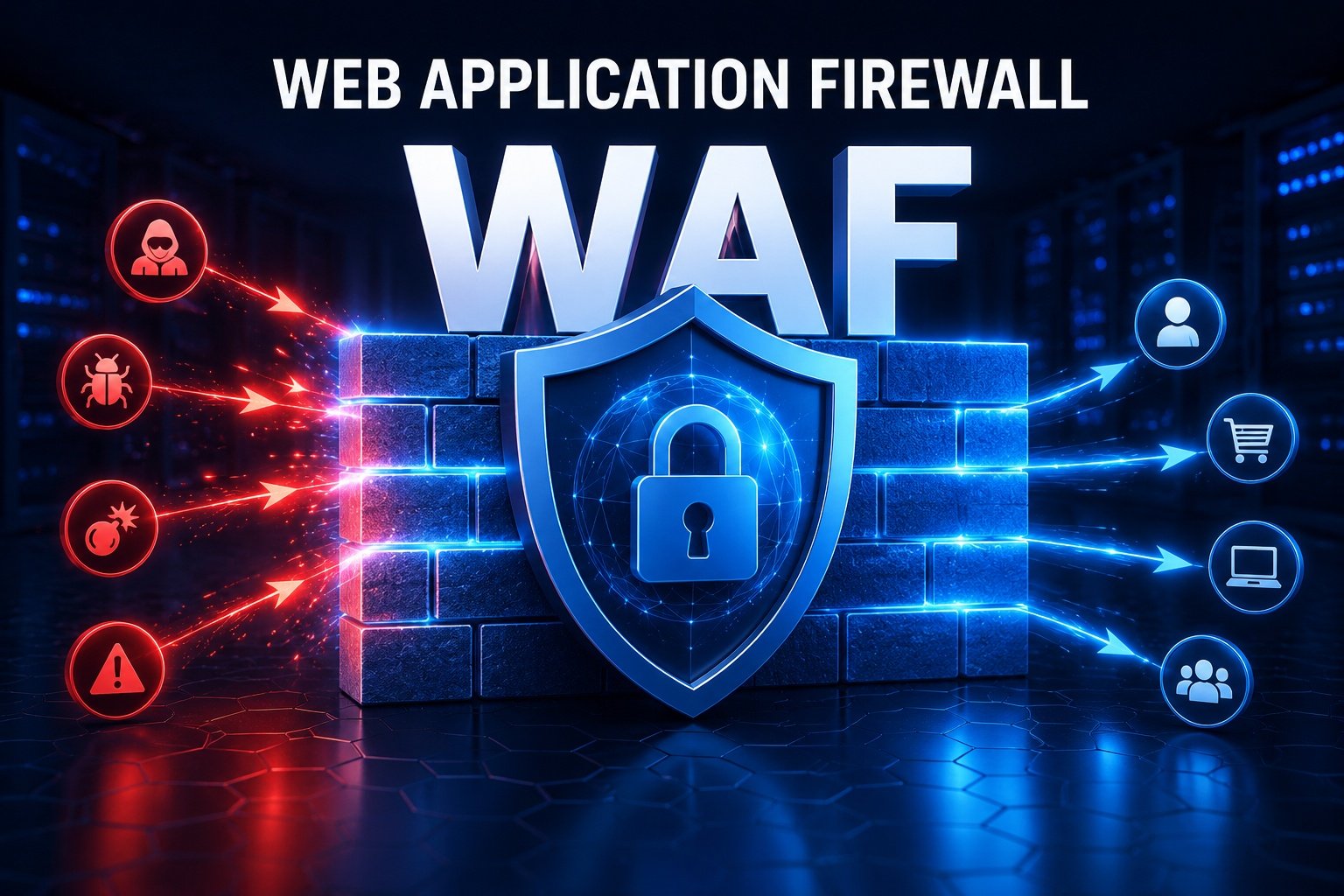
Web Application Firewall (WAF): Protecting Websites from Online Threats
Aug 07, 2026
Read More →
API Security
API Security : Best Practices Every Business Should Follow
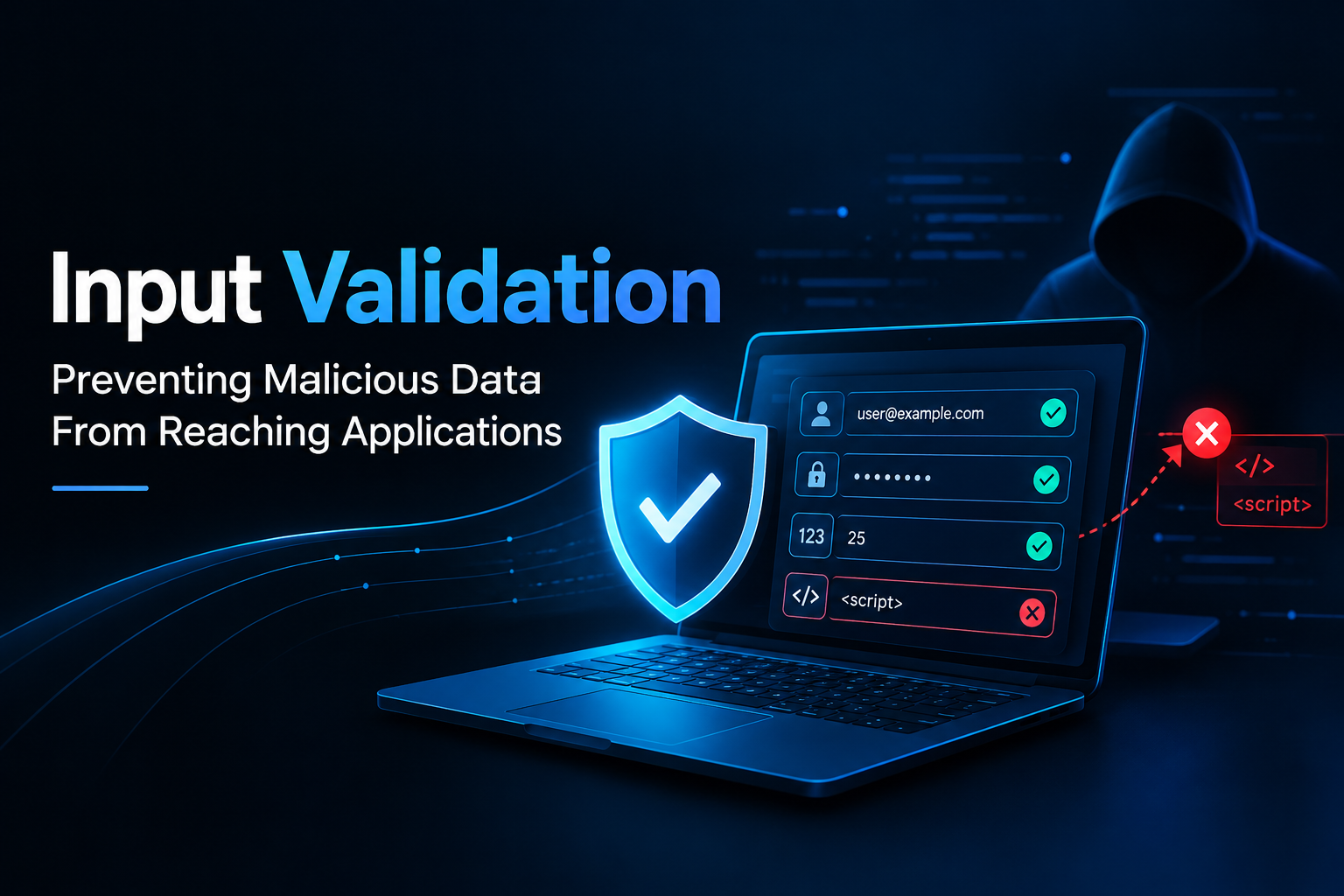
IntroductionApplication Programming Interfaces (APIs) are the foundation of modern digital applications, enabling websites, mobile apps, cloud services, and third-party platforms to communicate seamlessly. As businesses continue to embrace digital transformation, APIs have become essential for delivering faster, more connected user experiences. However, because APIs often expose sensitive business data and critical services, they have also become a primary target for cybercriminals. Implementing strong API security practices is essential to protect data, maintain customer trust, and ensure business continuity.Why API Security MattersAPIs handle valuable information such as customer records, payment details, authentication tokens, and business data. A single vulnerable API can expose an entire system to data breaches, unauthorized access, and service disruptions. Securing APIs helps organizations reduce cyber risks, comply with industry regulations, and maintain the integrity of their applications.Implement Strong Authentication and AuthorizationEvery API should verify the identity of users and applications before granting access. Using secure authentication methods such as OAuth 2.0, OpenID Connect, and Multi-Factor Authentication (MFA) ensures that only authorized users can interact with the API. Role-Based Access Control (RBAC) further limits access by assigning permissions based on user roles, reducing the chances of privilege abuse.Encrypt Data with HTTPS and TLSSensitive information transmitted through APIs should always be encrypted. HTTPS combined with Transport Layer Security (TLS) protects data from interception during transmission. Encryption ensures that confidential information such as login credentials, financial data, and personal information remains secure against man-in-the-middle attacks.Validate All API RequestsProper input validation is essential to prevent attackers from injecting malicious code. Every request should be checked for valid data types, acceptable input lengths, and allowed characters. Effective validation helps protect against common vulnerabilities such as SQL Injection, Cross-Site Scripting (XSS), and Command Injection attacks.Apply Rate LimitingRate limiting controls the number of requests a client can send within a specified time period. This practice helps prevent brute-force attacks, API abuse, and Distributed Denial-of-Service (DDoS) attempts. By limiting excessive requests, businesses can maintain API availability and improve overall performance.Monitor and Log API ActivityContinuous monitoring enables organizations to identify suspicious behavior before it becomes a serious security incident. Detailed API logs provide visibility into user activity, failed login attempts, and unusual traffic patterns. Integrating API monitoring with a Security Information and Event Management (SIEM) solution allows security teams to respond quickly to potential threats.Perform Regular Security TestingRoutine vulnerability assessments and penetration testing help identify weaknesses before attackers exploit them. Automated security scans should be conducted regularly to detect outdated software, insecure configurations, and coding flaws. Keeping APIs and their dependencies updated with the latest security patches significantly reduces cybersecurity risks.Follow the Principle of Least PrivilegeApplications and users should only receive the minimum permissions required to perform their tasks. Limiting access reduces the impact of compromised accounts and prevents attackers from gaining unnecessary privileges within the system.Keep API Documentation SecureWell-maintained API documentation improves development efficiency, but sensitive details such as API keys, passwords, and internal endpoints should never be publicly exposed. Secure documentation helps developers while minimizing information disclosure risks.ConclusionAPI security is a critical component of modern cybersecurity. As businesses increasingly rely on APIs to power digital services, protecting these interfaces becomes essential for safeguarding sensitive information and maintaining customer trust. By implementing strong authentication, encrypting data, validating requests, monitoring activity, applying rate limits, and conducting regular security assessments, organizations can significantly reduce the risk of API-related cyberattacks and build secure, resilient digital applications.
Aug 03, 2026
Read More →
Digital Forensics
Digital Forensic: Investigating Cyber Incidents Effectively
IntroductionAs cyber threats continue to evolve, organizations need effective ways to investigate and recover from security incidents. Digital forensics plays a critical role in identifying the source of cyberattacks, preserving digital evidence, and helping businesses strengthen their cybersecurity defenses.What is Digital Forensics?Digital forensics is the process of collecting, preserving, analyzing, and presenting digital evidence from computers, mobile devices, servers, and networks. It enables organizations to determine how a cyber incident occurred while ensuring the integrity of the evidence.Key Steps in a Digital Forensics Investigation1. Evidence CollectionThe first step involves securely collecting digital evidence from affected systems without modifying or damaging the original data.2. Data AnalysisForensic specialists analyze logs, files, emails, network traffic, and malware to identify the attack method, affected systems, and the attacker's activities.3. Evidence PreservationMaintaining the integrity of digital evidence is essential. Proper documentation and a secure chain of custody ensure that evidence remains reliable for legal and compliance purposes.4. Reporting and RemediationA detailed forensic report explains the cause of the incident, the impact, and recommendations to improve security and prevent future cyberattacks.Benefits of Digital ForensicsIdentifies the root cause of cyber incidents.Supports legal investigations and regulatory compliance.Helps recover lost or compromised data.Strengthens incident response and security strategies.Prevents similar attacks through actionable insights.Common Digital Forensics ApplicationsDigital forensics is widely used for investigating ransomware attacks, phishing campaigns, insider threats, data breaches, financial fraud, malware infections, and unauthorized system access.ConclusionDigital forensics is an essential component of modern cybersecurity. By investigating cyber incidents effectively, organizations can minimize damage, recover critical evidence, improve incident response, and build stronger defenses against future cyber threats. Investing in digital forensic expertise ensures faster recovery, better security, and long-term business resilience. 
Aug 01, 2026
Read More →
Blockchain security
Protecting Blockchain Applications From Emerging Threat
IntroductionBlockchain technology powers cryptocurrencies, decentralized applications (dApps), and smart contracts, offering transparency and security. However, as blockchain adoption grows, cyber threats targeting these applications are also increasing. Strong blockchain security is essential to protect digital assets, maintain trust, and ensure reliable operations.What is Blockchain Security?Blockchain security refers to the combination of technologies, policies, and best practices designed to protect blockchain networks, smart contracts, digital assets, and decentralized applications from cyber threats.A comprehensive blockchain security strategy includes:Secure smart contract developmentStrong cryptographic encryptionIdentity and access managementNetwork monitoringConsensus mechanism protectionPrivate key securityContinuous vulnerability assessmentsRegulatory complianceWhy Blockchain Security MattersAlthough blockchain technology is inherently resistant to data tampering, applications built on blockchain can still be vulnerable to attacks.Strong blockchain security helps organizations:Protect digital assets from theftPrevent smart contract exploitsMaintain user trustEnsure regulatory complianceSecure decentralized finance (DeFi) platformsReduce financial lossesImprove business continuityCommon Blockchain Security ThreatsSome of the most common threats include:Smart Contract Vulnerabilities: Coding flaws that attackers can exploit.Private Key Theft: Stolen keys can lead to unauthorized access to digital assets.51% Attacks: Attackers gain control of the majority of a blockchain network.DeFi Exploits: Weaknesses in decentralized finance platforms can result in financial losses.Phishing & Social Engineering: Users are tricked into revealing sensitive information.Best Practices for Blockchain SecurityTo protect blockchain applications, organizations should:Conduct regular smart contract audits.Use Multi-Factor Authentication (MFA).Secure private keys with hardware or multi-signature wallets.Monitor blockchain networks continuously.Perform regular security assessments and updates.Benefits of Blockchain SecurityEffective blockchain security helps:Protect digital assetsPrevent fraud and cyberattacksImprove user trustEnsure regulatory complianceSupport secure business growthConclusionAs blockchain technology continues to evolve, organizations must stay ahead of emerging threats by implementing strong security practices. A proactive blockchain security strategy helps safeguard applications, protect sensitive data, and build a secure foundation for future innovation.
Jul 31, 2026
Read More →
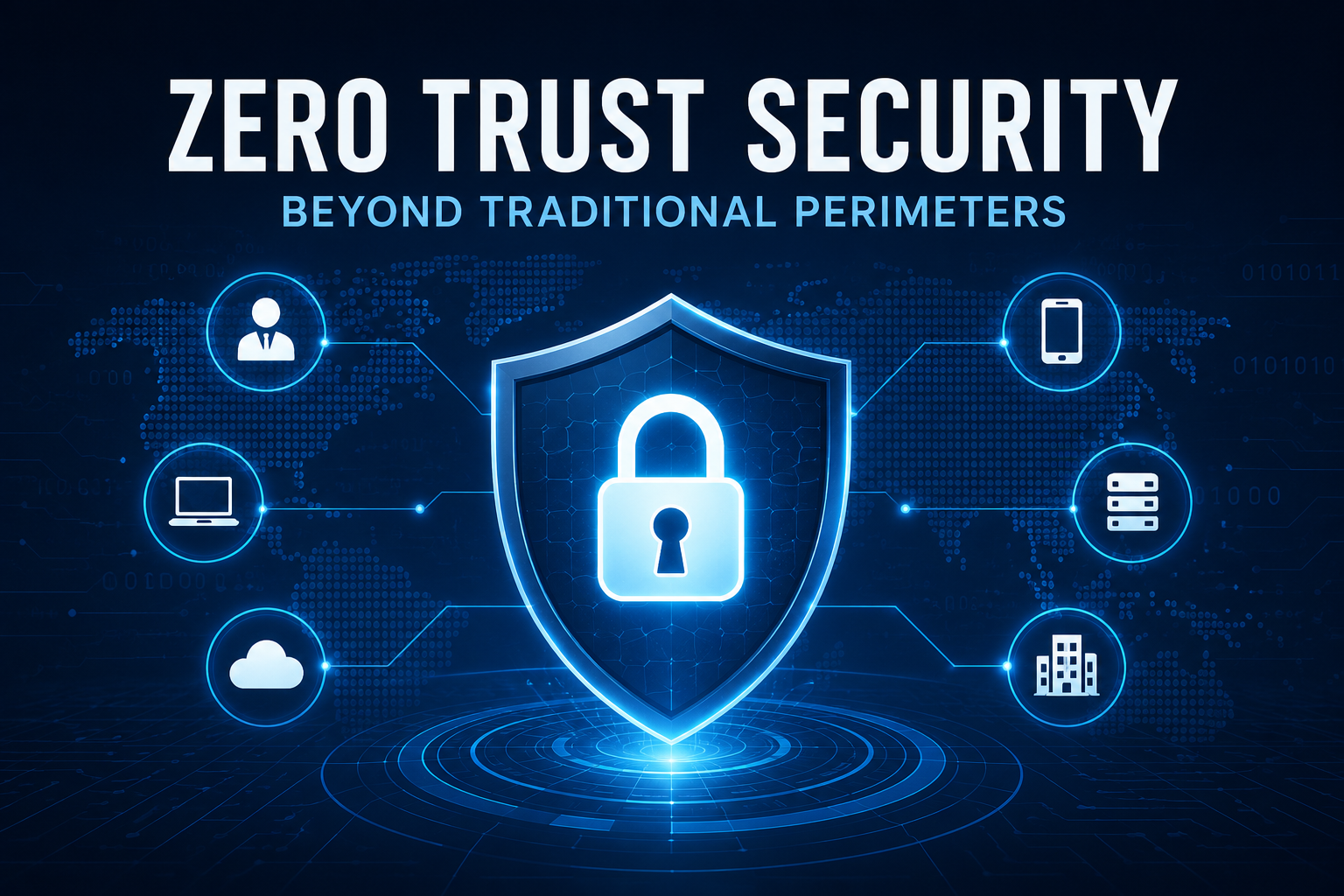
Zero Trust Architecture
Zero Trust Security: Why Businesses Are Moving Beyond Traditional Perimeters
IntroductionAs organizations embrace cloud computing, remote work, hybrid environments, and connected devices, traditional network security is no longer enough. The old approach of trusting everything inside the corporate network has become outdated because cybercriminals can easily exploit compromised accounts, stolen credentials, and vulnerable endpoints.This shift has led businesses to adopt Zero Trust Security, a cybersecurity model based on a simple principle: "Never Trust, Always Verify." Instead of automatically trusting users or devices inside the network, Zero Trust continuously verifies every access request before granting permission.What Is Zero Trust Security?Zero Trust Security is a cybersecurity framework that requires continuous authentication and authorization for every user, device, application, and network connection—regardless of whether the request originates inside or outside the organization's network.Unlike traditional perimeter-based security, Zero Trust assumes that every connection could be a potential threat until verified.Its primary objective is to minimize the risk of unauthorized access while reducing the impact of cyberattacks.Why Traditional Security Perimeters Are No Longer EnoughTraditional security models relied heavily on firewalls and VPNs, assuming everything inside the network was trustworthy. However, today's IT environments have changed significantly.Businesses now operate with:Remote and hybrid employeesCloud-based applicationsMultiple SaaS platformsBring Your Own Device (BYOD) policiesInternet of Things (IoT) devicesThird-party vendors and contractorsThese changes have expanded the attack surface, making perimeter-based security ineffective against modern cyber threats.Core Principles of Zero Trust Architecture1. Verify Every UserEvery login request requires identity verification using strong authentication methods such as Multi-Factor Authentication (MFA), biometrics, or hardware security keys.2. Least Privilege AccessUsers receive only the permissions required to perform their specific tasks. This limits damage if an account becomes compromised.3. Continuous AuthenticationAuthentication doesn't stop after login. Zero Trust continuously evaluates user behavior, device health, and risk levels throughout each session.4. Device VerificationOnly secure, compliant, and authorized devices are allowed to access company resources.5. Micro-SegmentationNetworks are divided into smaller secure zones. Even if attackers breach one segment, they cannot easily move laterally across the organization.6. Continuous MonitoringSecurity systems continuously analyze network traffic, user activities, and application behavior to detect suspicious activity in real time.Benefits of Zero Trust SecurityStronger Protection Against CyberattacksContinuous verification significantly reduces the chances of unauthorized access.Reduced Insider ThreatsEmployees and contractors receive limited access based on business needs, minimizing internal risks.Better Protection for Remote WorkZero Trust secures employees working from home, branch offices, or public networks without relying solely on VPNs.Improved Regulatory ComplianceOrganizations can better meet compliance requirements such as GDPR, HIPAA, PCI DSS, and ISO 27001.Enhanced Cloud SecurityZero Trust secures cloud applications, workloads, and hybrid environments through identity-based access controls.Faster Threat DetectionContinuous monitoring enables security teams to detect and respond to suspicious activities before they become major incidents effectively.Best Practices for Implementing Zero TrustTo successfully adopt Zero Trust Security, organizations should:Identify and classify critical assets.Implement Multi-Factor Authentication across all accounts.Apply least privilege access policies.Continuously monitor users, devices, and applications.Encrypt sensitive data at rest and in transit.The Future of Zero Trust SecurityAs cyber threats continue to evolve, Zero Trust is becoming a foundational security strategy rather than an optional enhancement. Artificial Intelligence (AI), Machine Learning (ML), behavioral analytics, and automated threat detection are making Zero Trust systems even more intelligent and adaptive.Organizations investing in Zero Trust today are better prepared to defend against ransomware, phishing, insider threats, and sophisticated cyberattacks while enabling secure digital transformation. ConclusionTraditional network boundaries no longer provide adequate protection in today's cloud-first, remote-work environment. Zero Trust Security replaces outdated assumptions with continuous verification, least privilege access, and real-time monitoring, creating a more resilient cybersecurity posture. 
Jul 30, 2026
Read More →

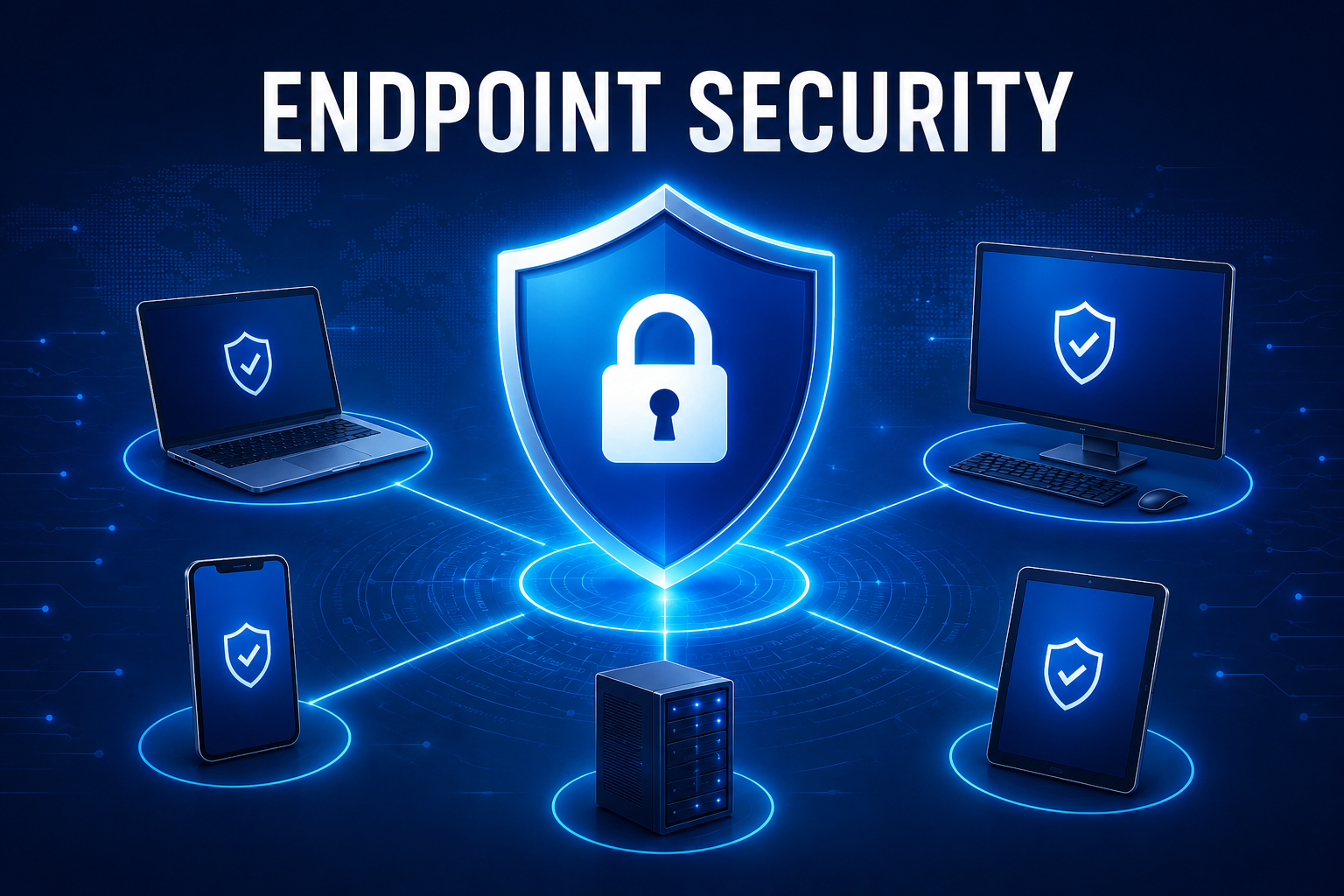
Endpoint Security
Endpoint Security: Protecting Every Device From Cyber Defense
IntroductionAs businesses increasingly rely on laptops, desktops, smartphones, servers, and IoT devices, protecting every endpoint has become a critical part of cybersecurity. Each connected device can serve as an entry point for cybercriminals if left unprotected. Endpoint security helps safeguard these devices against malware, ransomware, phishing attacks, and unauthorized access, ensuring that sensitive business data remains secure.Why Endpoint Security MattersModern organizations operate in hybrid and remote work environments where employees access company resources from multiple devices and locations. Without proper endpoint protection, a single compromised device can put the entire network at risk. Endpoint security reduces cyber risks, protects confidential information, improves productivity, and helps organizations meet industry compliance requirements.Common Endpoint Security Threats1. Malware AttacksMalicious software such as viruses, worms, spyware, and trojans can steal data, damage systems, and disrupt business operations.2. RansomwareRansomware encrypts files and demands payment for their release. Endpoint protection helps identify and block ransomware before it spreads.3. Phishing AttacksEmployees may unknowingly click malicious links or attachments, allowing attackers to compromise devices and steal credentials.4. Zero-Day ExploitsThese attacks target previously unknown software vulnerabilities before security patches become available.5. Insider ThreatsEmployees or contractors may intentionally or accidentally expose sensitive information, making endpoint monitoring essential.6. Fileless MalwareUnlike traditional malware, fileless attacks operate directly in system memory, making advanced behavioral detection crucial.Key Features of Endpoint SecurityReal-Time Threat Detection: Monitors devices continuously to identify and stop suspicious activities.Endpoint Detection and Response (EDR): Detects, investigates, and responds to advanced cyber threats.AI-Powered Protection: Uses artificial intelligence to recognize both known and emerging threats.Data Encryption: Protects sensitive information stored on devices from unauthorized access.Automatic Patch Management: Keeps operating systems and applications updated to reduce security vulnerabilities.Benefits of Endpoint SecurityImplementing endpoint security helps businesses prevent cyberattacks, minimize downtime, secure remote employees, and improve overall network security. It also enhances visibility across connected devices, allowing IT teams to respond quickly to incidents before they escalate.Best Practices for Endpoint SecurityDeploy endpoint protection on every deviceKeep operating systems and applications updatedEnable multi-factor authentication (MFA)Conduct regular employee cybersecurity awareness trainingMonitor endpoint activity continuouslyImplement Zero Trust security principlesEncrypt sensitive dataPerform regular vulnerability assessmentsMaintain secure backup and disaster recovery plansConclusionEndpoint security is a vital component of a strong cybersecurity strategy. By protecting every connected device with advanced security solutions, businesses can reduce cyber risks, safeguard critical data, and ensure uninterrupted operations in today's evolving digital landscape.
Jul 29, 2026
Read More →
IOT Security
IoT Security: Safeguarding Connected Devices Against Cyber Attacks
The Internet of Things (IoT) is transforming industries by connecting smart devices, sensors, and systems that enable automation and real-time communication. However, as the number of connected devices grows, so do the cybersecurity risks. Without proper protection, IoT devices can become entry points for hackers, leading to data breaches, malware attacks, and operational disruptions.IoT Security focuses on protecting devices, networks, and data through strong authentication, encryption, secure communication protocols, regular firmware updates, and continuous monitoring. These security measures help prevent unauthorized access, ensure data privacy, and maintain the reliability of connected systems.Organizations across healthcare, manufacturing, retail, smart cities, logistics, and industrial automation rely on IoT security to safeguard critical infrastructure, improve operational efficiency, and maintain customer trust.Key Benefits of IoT Security Protects connected devices from cyberattacks Prevents unauthorized access and data breaches Ensures secure device communication Improves business continuity and operational reliability Supports regulatory compliance and data privacy Builds customer trust and confidenceCommon IoT Security ChallengesAs IoT adoption increases, organizations face several security challenges that require continuous attention:Weak Device Authentication: Default passwords and poor authentication methods can expose devices to unauthorized access.Outdated Firmware: Unpatched devices often contain vulnerabilities that attackers can exploit.Data Privacy Risks: Sensitive information transmitted between devices must be encrypted to prevent interception.Network Vulnerabilities: Poorly secured networks can allow cybercriminals to move laterally and compromise multiple devices.Lack of Continuous Monitoring: Without real-time monitoring, suspicious activities may go undetected, increasing the risk of security incidents.Best Practices for IoT SecurityTo build a secure IoT environment, organizations should follow these best practices:Use strong passwords and Multi-Factor Authentication (MFA).Keep device firmware and software updated regularly.Encrypt data both in transit and at rest.Segment IoT devices from critical business networks.Continuously monitor connected devices for unusual activity.Implement a Zero Trust Security approach for all connected systems.ConclusionAs businesses continue to adopt smart technologies, IoT security has become a critical component of digital transformation. A proactive security approach—including strong authentication, data encryption, timely firmware updates, and continuous monitoring—helps organizations reduce cyber risks and protect their connected ecosystems. By investing in robust IoT security, businesses can ensure secure operations, safeguard sensitive information, and build a resilient foundation for future innovation.
Jul 18, 2026
Read More →
Ransomware Protection
Ransomware Protection: Strategies to Prevent Costly Attacks
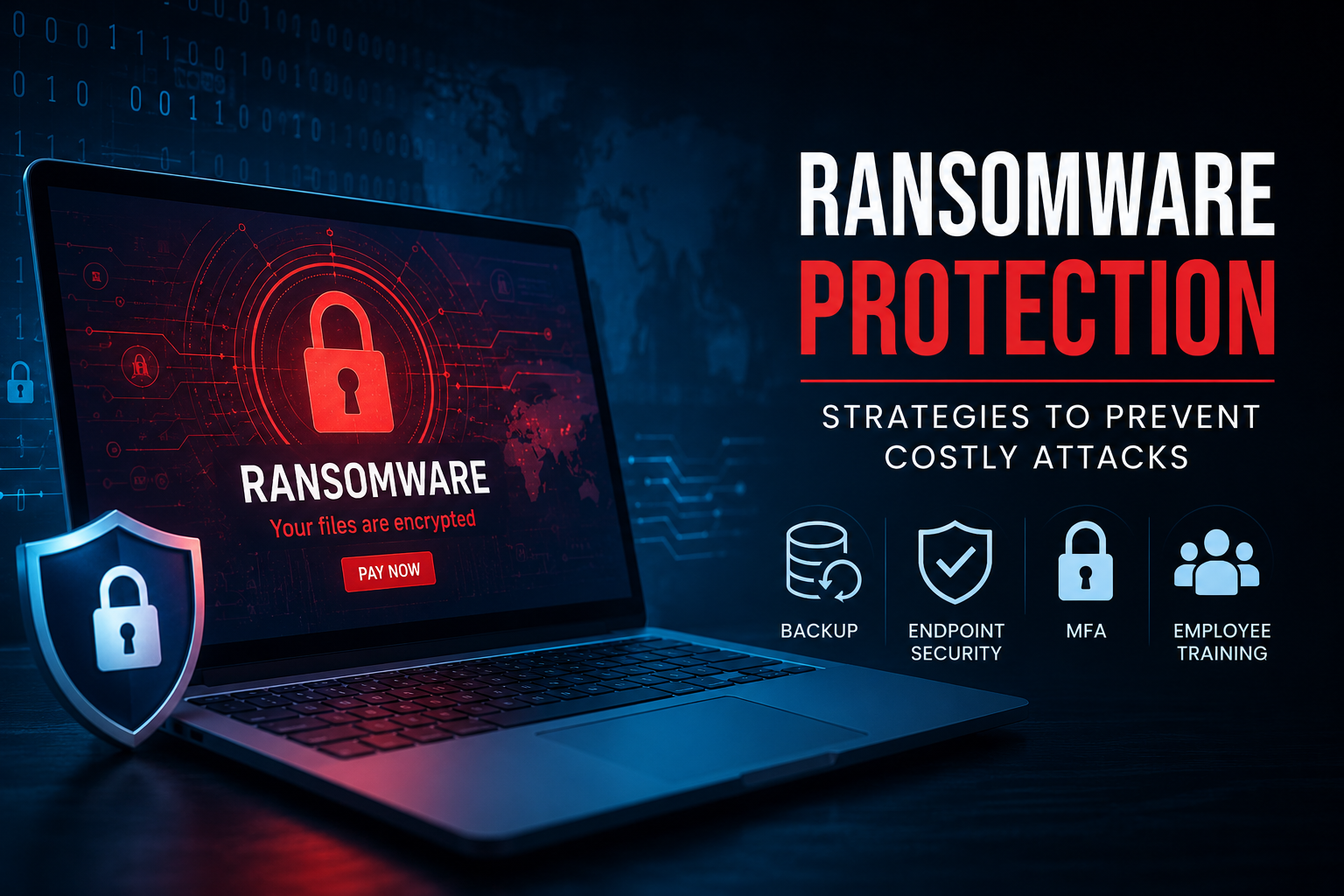
IntroductionRansomware is a type of malware that encrypts files and demands payment to restore access. It can cause data loss, financial damage, and business downtime. Implementing strong cybersecurity practices is essential to reduce the risk of ransomware attacks.Top Strategies to Prevent Ransomware1. Keep Software UpdatedRegularly install security patches for operating systems and applications to fix vulnerabilities.2. Use Multi-Factor Authentication (MFA)Enable MFA for email, cloud services, and remote access to prevent unauthorized logins.3. Back Up Your DataMaintain regular backups and store at least one copy offline or in secure cloud storage.4. Train EmployeesEducate staff to identify phishing emails, suspicious links, and malicious attachments.5. Deploy Endpoint SecurityUse antivirus, Endpoint Detection and Response (EDR), and firewalls to detect and stop threats.6. Limit User AccessFollow the principle of least privilege by giving users only the permissions they need.What to Do During an AttackDisconnect infected devices from the network.Report the incident to your IT/security team.Restore data from clean backups.Investigate the attack before reconnecting systems.ConclusionRansomware attacks are becoming more advanced, but they can be prevented with regular updates, strong authentication, reliable backups, employee awareness, and continuous security monitoring. A proactive security strategy helps protect your data, operations, and business reputation.
Jul 17, 2026
Read More →
Cyber Security
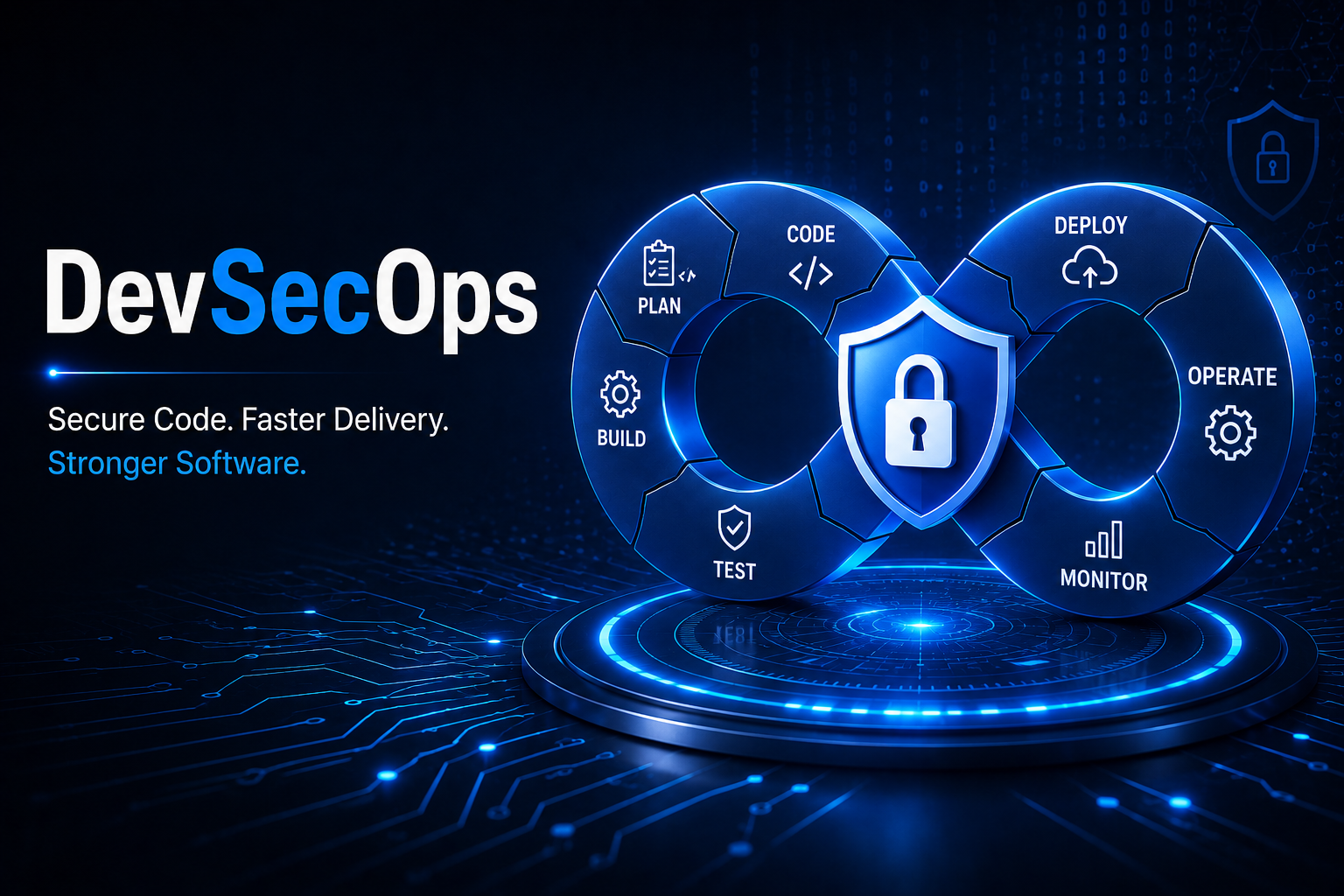
Security Operations Center (SOC): The Backbone of Cyber Defense
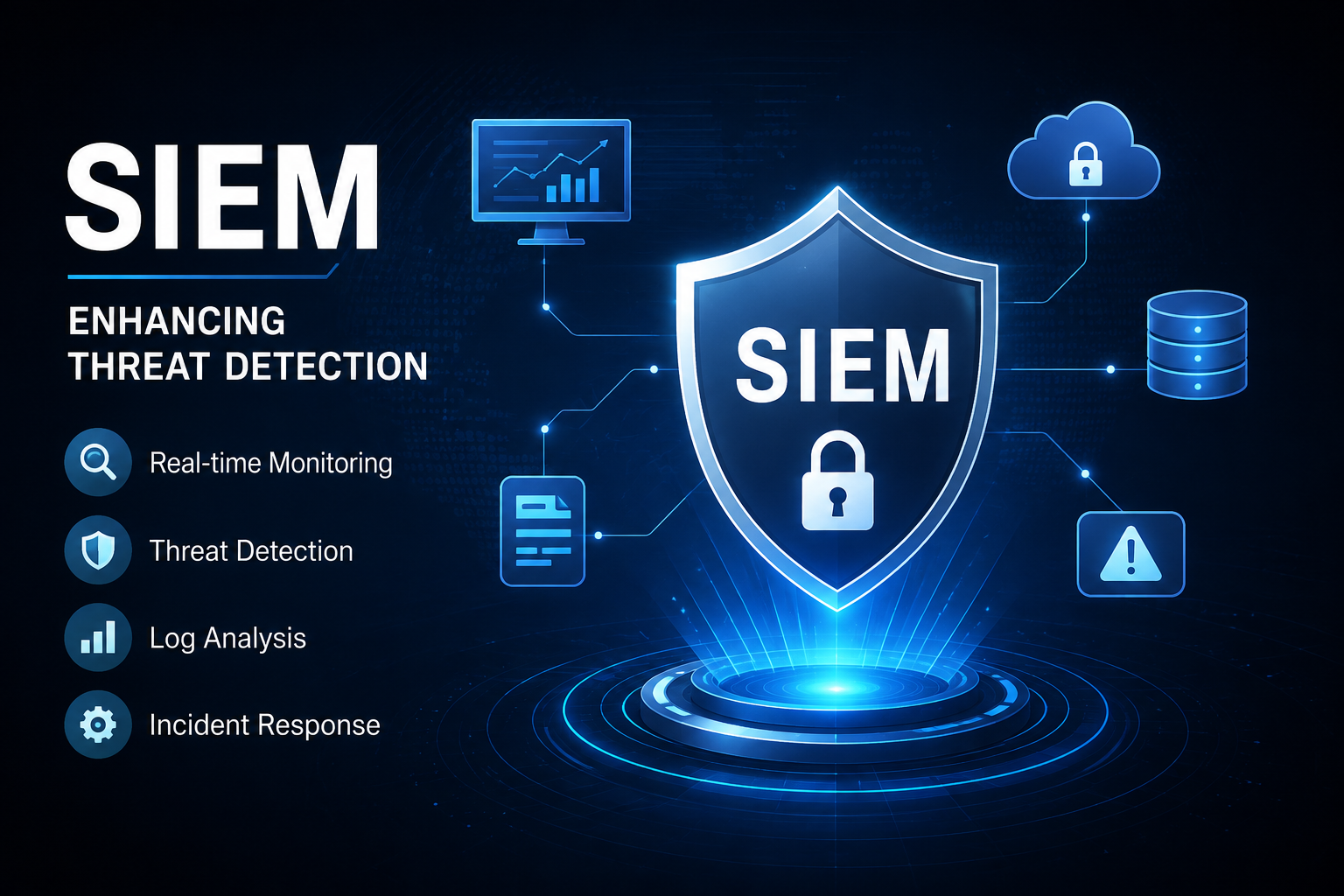
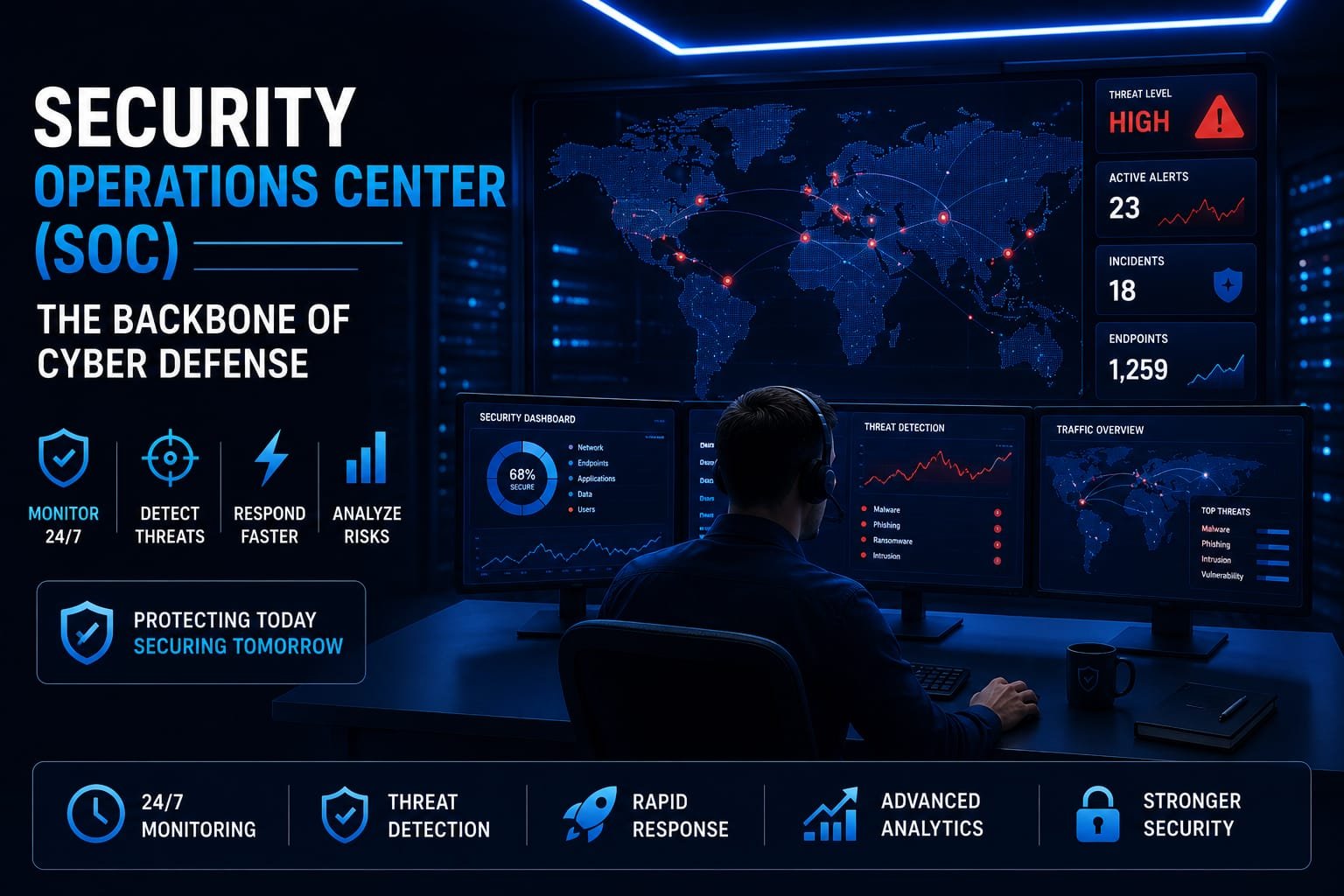
IntroductionAs cyber threats continue to evolve, businesses need constant protection against attacks such as malware, ransomware, phishing, and data breaches. A Security Operations Center (SOC) is a centralized team that monitors, detects, and responds to cyber threats 24/7. It combines skilled security professionals with advanced technologies to safeguard an organization's networks, systems, and sensitive data.What is a Security Operations Center (SOC)?A Security Operations Center (SOC) is a dedicated cybersecurity unit responsible for continuously monitoring an organization's IT environment. It identifies suspicious activities, investigates security incidents, and responds quickly to minimize damage.Key Benefits of a SOC24/7 threat monitoringFaster incident detection and responseImproved data protectionReduced cybersecurity risksCompliance with industry regulationsEnhanced business continuityCore SOC FunctionsContinuous security monitoringThreat detection using SIEM and other toolsIncident response and recoveryVulnerability managementThreat intelligence analysisConclusionA Security Operations Center (SOC) is the backbone of modern cyber defense. By providing continuous monitoring and rapid response to cyber threats, it helps businesses protect critical data, reduce security risks, and maintain a strong cybersecurity posture.
Jul 16, 2026
Read More →
DNS Security
DNS Security: Preventing Domain-Based Cyber Attacks
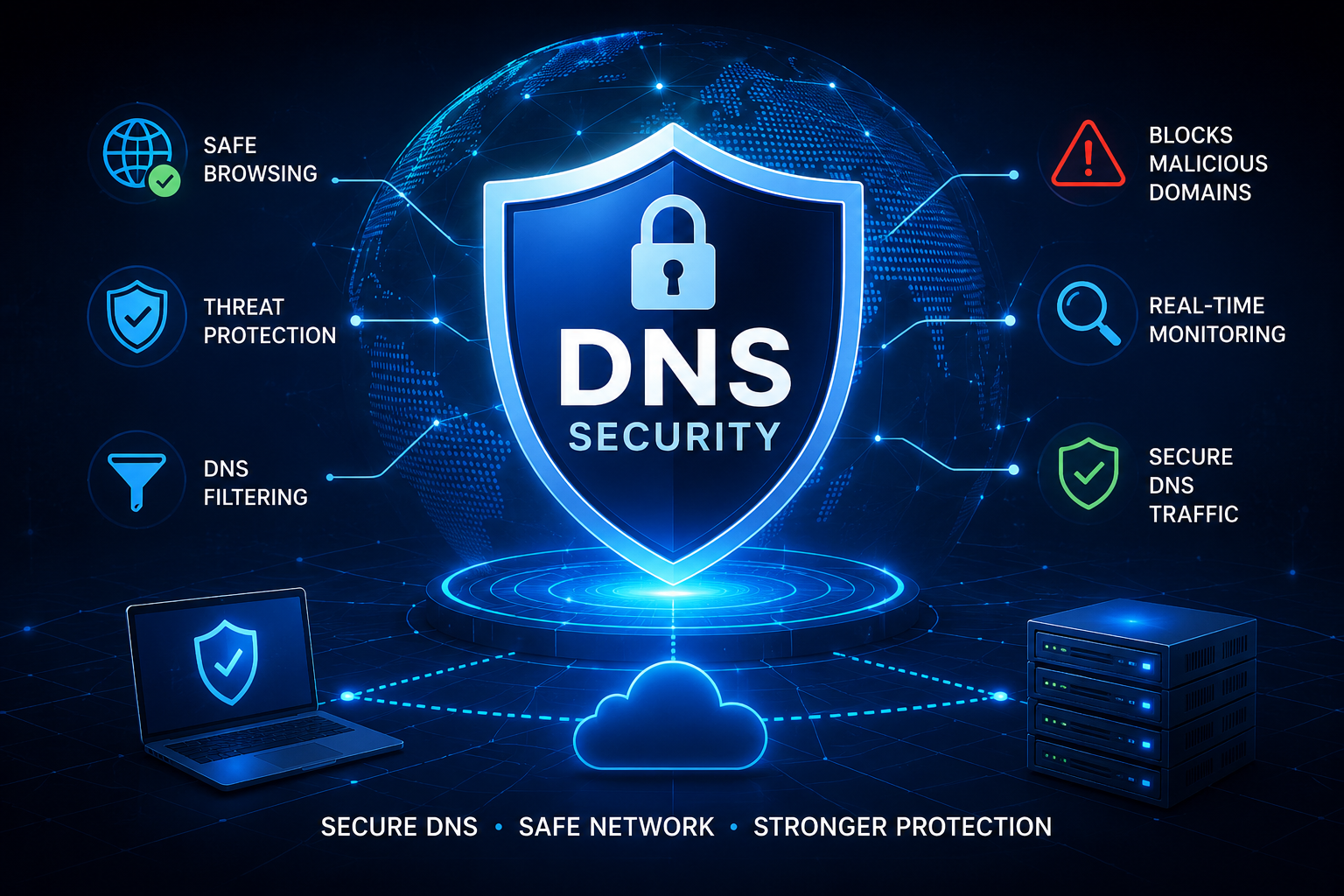
IntroductionEvery website, application, and online service depends on the Domain Name System (DNS) to connect users to the correct destination. Since DNS handles every internet request, it has become a common target for cybercriminals. DNS Security helps protect organizations by blocking malicious domains, preventing unauthorized redirections, and securing internet traffic.Why DNS Security MattersA compromised DNS can expose businesses to phishing attacks, malware infections, and data theft. Implementing DNS Security ensures safer internet access, improves network visibility, and minimizes the risk of cyber incidents.Key BenefitsBlocks malicious websitesPrevents phishing and malware attacksProtects business networks and sensitive dataImproves DNS traffic monitoringEnhances overall cybersecurity postureConclusionDNS Security is an essential layer of modern cybersecurity that safeguards organizations from domain-based threats. By securing DNS traffic and monitoring suspicious activity, businesses can create a safer and more reliable digital environment.
Jul 15, 2026
Read More →
Vulnerability Assessment
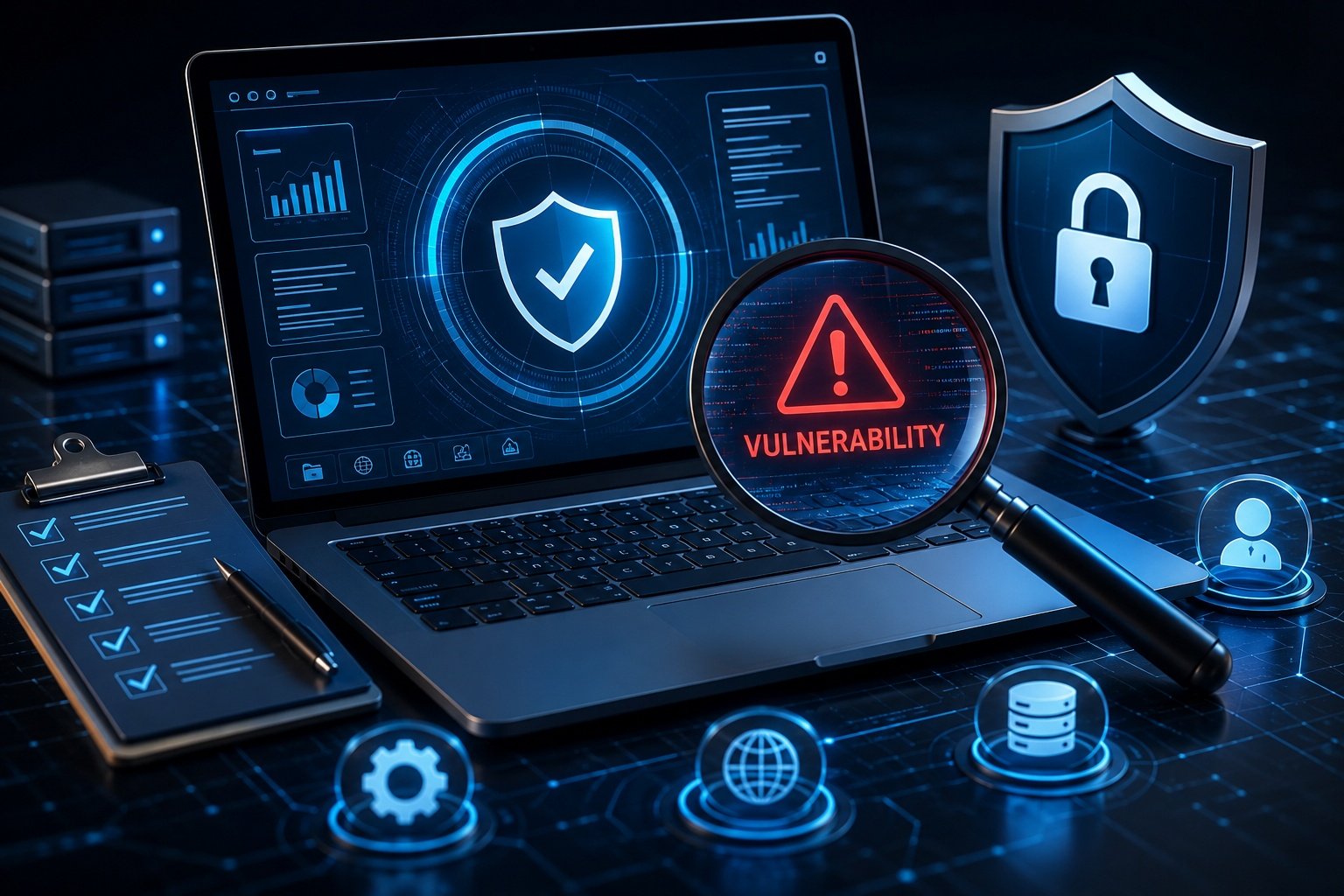
Vulnerability Assessment: Finding Security Weaknesses Before Hackers Do
IntroductionCyber threats are becoming more sophisticated every day. Hackers continuously search for weaknesses in websites, networks, applications, and cloud environments to steal sensitive data or disrupt business operations. Organizations that fail to identify these weaknesses early often become victims of costly cyberattacks.A Vulnerability Assessment is a proactive cybersecurity process that identifies, analyzes, and prioritizes security weaknesses before attackers can exploit them. It enables businesses to strengthen their security posture, reduce cyber risks, and maintain compliance with industry regulations.What is Vulnerability Assessment?A Vulnerability Assessment is a systematic evaluation of IT systems, applications, servers, databases, and network infrastructure to identify known security vulnerabilities.The assessment helps organizations understand:Security gapsOutdated softwareWeak passwordsMissing security patchesMisconfigured systemsOpen portsNetwork vulnerabilitiesApplication security flawsOnce vulnerabilities are identified, security teams can prioritize and remediate them before they become serious threats.Why Vulnerability Assessment MattersCybercriminals often exploit vulnerabilities that remain unnoticed for months.Regular assessments help businesses:Detect security weaknesses earlyPrevent data breachesReduce cyberattack risksImprove overall security postureProtect customer informationMeet regulatory compliance requirementsMinimize financial lossesIncrease customer trustTypes of Vulnerability AssessmentsNetwork Vulnerability AssessmentExamines internal and external networks for configuration issues, exposed services, insecure devices, and unauthorized access points.Web Application AssessmentIdentifies security flaws in websites and web applications, including:SQL InjectionCross-Site Scripting (XSS)Broken AuthenticationSecurity MisconfigurationsCloud Vulnerability AssessmentEvaluates cloud infrastructure, storage, virtual machines, APIs, and cloud applications for security weaknesses.Database AssessmentChecks databases for:Weak permissionsMisconfigurationsUnencrypted sensitive dataAccess control issuesWireless Network AssessmentTests Wi-Fi security to identify weak encryption, rogue devices, and unauthorized acceBest PracticesTo maximize cybersecurity effectiveness:Conduct assessments regularlyApply security patches promptlyUse multi-factor authentication (MFA)Encrypt sensitive dataMonitor network activity continuouslyImplement Zero Trust principlesTrain employees on cybersecurity awarenessPerform periodic security auditsConclusionCyber threats continue to evolve, making proactive security more important than ever. A comprehensive Vulnerability Assessment enables organizations to identify security weaknesses before attackers exploit them. By regularly assessing systems, prioritizing risks, and implementing timely remediation, businesses can protect sensitive data, maintain compliance, and build a resilient cybersecurity strategy for long-term success.
Jul 14, 2026
Read More →
Phishing
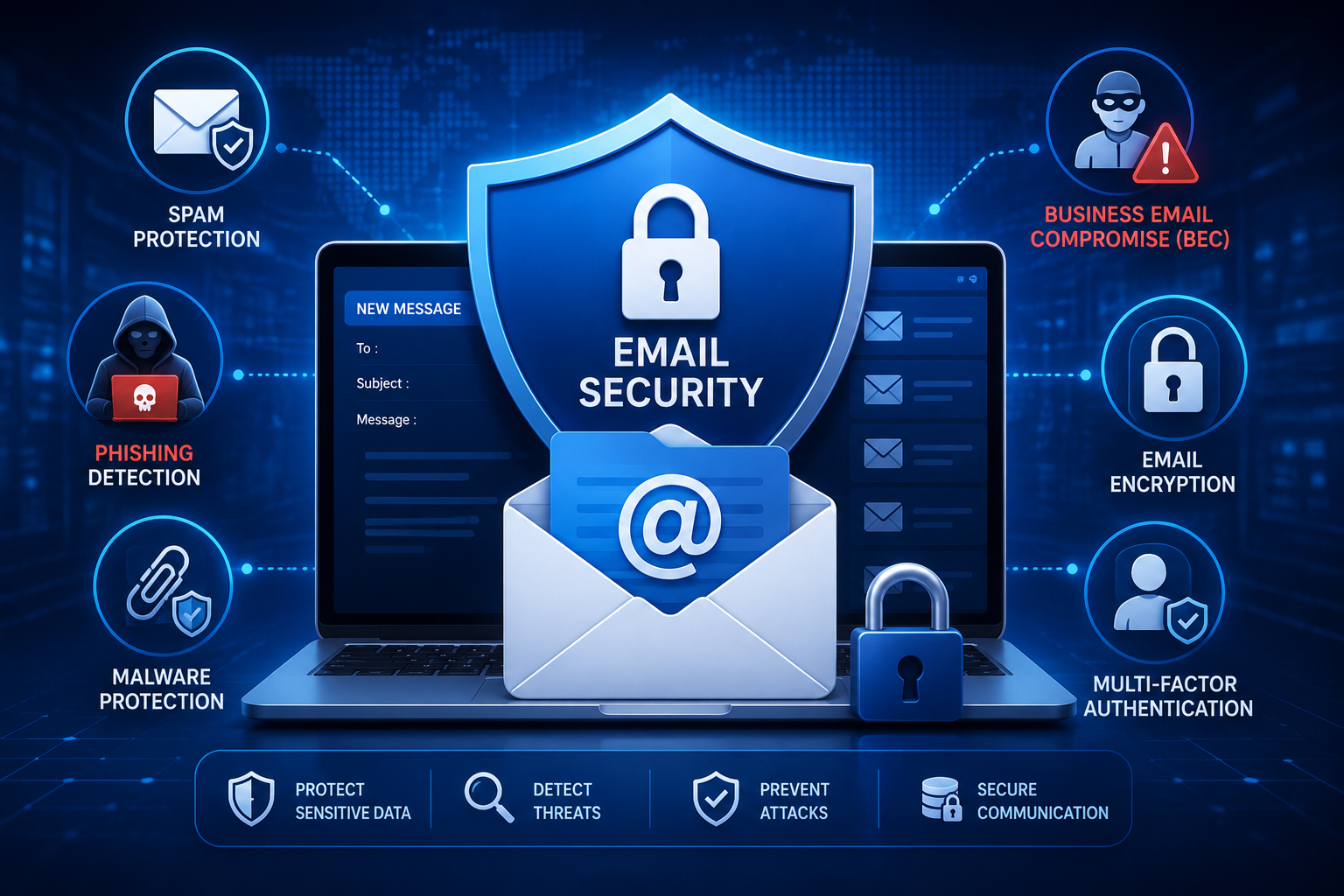
Email Security: Preventing Phishing and Business Email Compromise
IntroductionEmail security is one of the most important aspects of cybersecurity. Cybercriminals use phishing emails, malware, ransomware, and Business Email Compromise (BEC) attacks to steal sensitive information and financial data. Implementing strong email protection helps individuals and organizations secure their communications and prevent cyber threats.What is Email Security?Email Security is the process of protecting email accounts, messages, and communication systems from cyber threats such as phishing, malware, spam, ransomware, and unauthorized access.It ensures:Secure email communicationProtection from phishing attacksPrevention of malware infectionsSafe sharing of confidential informationWhy Email Security is ImportantWithout proper email protection, organizations risk data breaches, financial fraud, and identity theft.Key Reasons:Protect confidential business informationPrevent phishing and email scamsReduce malware infectionsSecure employee communicationImprove business continuityIn 2026, email remains the primary target for cybercriminals, making email security more important than ever.Types of Email Security1. Spam FilteringBlocks unwanted and suspicious emails before they reach your inbox.2. Anti-Phishing ProtectionDetects fake emails designed to steal usernames, passwords, and financial information.3. Email EncryptionEncrypts email content to keep sensitive information private.4. Malware ProtectionScans email attachments and links for viruses and malicious software.5. Multi-Factor Authentication (MFA)Adds an extra layer of security to email accounts.Common Email Security ThreatsPhishing – Fake emails that steal login credentials.Business Email Compromise (BEC) – Fraudsters impersonate executives or employees.Spam Emails – Unwanted emails containing malicious links.Malware Attachments – Infected files that install malicious software.Ransomware – Encrypts important business data after opening infected emails.Future of Email SecurityArtificial Intelligence and Machine Learning are improving email protection by detecting phishing attempts, suspicious attachments, and fraudulent emails in real time. Zero Trust Security and advanced email authentication technologies like SPF, DKIM, and DMARC are becoming industry standards.ConclusionEmail security is essential for protecting sensitive information and preventing phishing, malware, and Business Email Compromise attacks. By implementing modern email protection solutions and following security best practices, businesses and individuals can significantly reduce cyber risks.
Jul 13, 2026
Read More →
Network Security
Complete Guide to Protect Your Data from Cyber Threats in 2026
IntroductionIn today’s digital world, protecting data is more important than ever. With increasing cyber attacks and online threats, Network Security has become a critical part of every business and individual’s life.Network security refers to the process of protecting a computer network from unauthorized access, misuse, or cyber attacks. Whether it\'s a small website or a large company server, strong security is essential to keep data safe.What is Network Security?Network Security is a combination of technologies, policies, and practices designed to protect networks, devices, and data from cyber threats.It ensures:Safe data transferProtection from hackersPrevention of data leaksWhy Network Security is ImportantWithout proper security, your system is vulnerable to attacks like hacking, malware, and data theft.Key Reasons:Protect sensitive informationPrevent financial lossMaintain user trustEnsure business continuityIn 2026, cyber attacks are more advanced, making security more important than ever.Types of Network Security1. Firewall SecurityFirewalls act as a barrier between your network and external threats. They monitor incoming and outgoing traffic.2. Antivirus & Anti-malwareThese tools detect and remove harmful software that can damage your system.3. VPN (Virtual Private Network)VPN encrypts your internet connection, making it secure and private.4. Intrusion Detection System (IDS)It monitors suspicious activities and alerts users about potential threats.5. Access ControlLimits access to authorized users only, ensuring data safety.Common Network Security ThreatsUnderstanding threats helps in preventing them.Hacking – Unauthorized access to systemsPhishing – Fake emails to steal dataMalware – Harmful software attacksRansomware – Locks your data for moneyDDoS Attacks – Overloads servers and crashes websitesBest Practices for Network SecurityTo keep your network safe, follow these practices:Use strong passwordsKeep software updatedInstall firewall and antivirusUse secure Wi-Fi networksEnable two-factor authenticationRegular data backupFuture of Network SecurityWith the rise of AI and cloud computing, network security is evolving rapidly. Advanced technologies like AI-based threat detection and zero-trust security models are becoming popular.Businesses must stay updated to handle modern cyber threats effectively.ConclusionNetwork security is no longer optional—it is a necessity. Whether you are an individual or a business owner, protecting your data should be your top priority.By understanding threats and implementing proper security measures, you can safeguard your digital world.
May 06, 2026
Read More →
Application Security
Application Security: Safeguarding Software from Modern Cyber Threats
Application security focuses on identifying and fixing vulnerabilities throughout the software development lifecycle.From design to deployment, secure coding practices and security testing help protect applications from threats such as SQL injection, cross-site scripting (XSS), and authentication bypass attacks.Important Application Security Practices:Secure code reviewsVulnerability scanningPenetration testingWeb application firewalls (WAF)DevSecOps integrationStrong application security reduces risks and ensures safer user experiences.
Apr 30, 2026
Read More →
Cloud Security
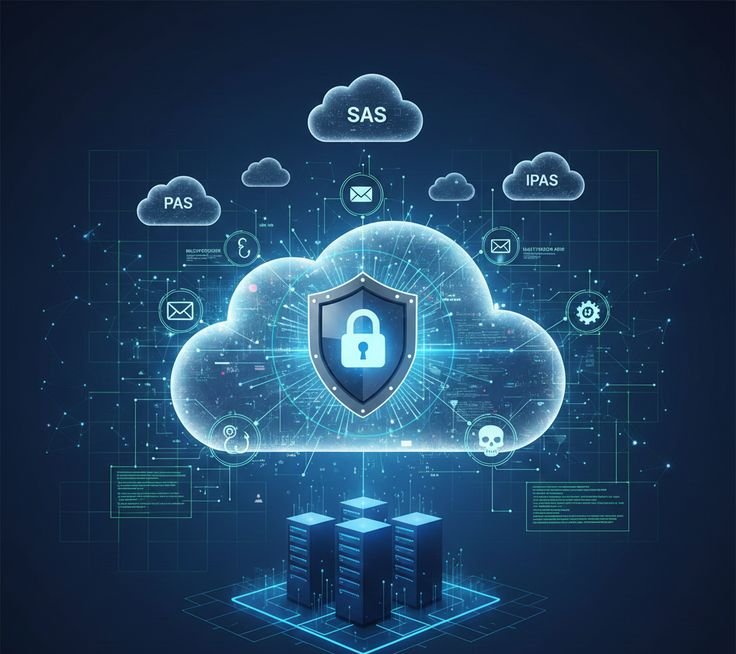
Cloud Security: Protecting Data and Applications in the Cloud Era
Cloud security encompasses the technologies, policies, and controls used to protect cloud-based systems, data, and infrastructure.As organizations increasingly adopt cloud services, securing cloud environments has become a top priority. Cloud security addresses risks such as data breaches, misconfigurations, insecure APIs, and unauthorized access.Cloud Security Best Practices:Enable multi-factor authenticationEncrypt sensitive dataRegularly audit configurationsImplement zero trust architectureMonitor cloud activity continuouslyA comprehensive cloud security strategy ensures safe and compliant cloud adoption.
Apr 30, 2026
Read More →
Data Security
Data Security Best Practices: Protecting Sensitive Information in 2026
Data security involves safeguarding digital information from unauthorized access, corruption, or theft. As data becomes increasingly valuable, protecting it is more important than ever.Organizations must secure data at rest, in transit, and in use. This includes implementing encryption, access controls, backup solutions, and monitoring systems.Essential Data Security Measures:Data encryptionAccess controlsData loss prevention (DLP)Secure backupsContinuous monitoringStrong data security helps organizations maintain customer trust, comply with regulations, and avoid costly breaches.
Apr 30, 2026
Read More →
Identity & Access Management
Identity and Access Management: Securing Digital Identities in Modern Enterprises
Identity and Access Management (IAM) ensures that the right individuals have access to the right resources at the right time. It is a critical component of modern cybersecurity.IAM systems manage user identities, authentication, and authorization. They help organizations control access to applications, networks, and sensitive information while minimizing unauthorized access risks.Core Components of IAM:User authenticationRole-based access control (RBAC)Multi-factor authentication (MFA)Single sign-on (SSO)Privileged access management (PAM)Implementing a robust IAM strategy improves security, enhances compliance, and streamlines user access management.
Apr 30, 2026
Read More →
Cyber Awareness
Cyber Awareness: Building a Human Firewall Against Cyber Threats
Cyber awareness is the foundation of organizational security. Employees are often the first line of defense against cyberattacks, making cybersecurity education essential.Cyber awareness training teaches users how to recognize phishing emails, avoid suspicious links, create strong passwords, and handle sensitive data securely. A well-informed workforce significantly reduces the risk of security breaches caused by human error.Why Cyber Awareness Matters:Prevents phishing attacksReduces human-related security incidentsEncourages safe online behaviorProtects personal and business dataStrengthens organizational security cultureRegular training, simulated phishing exercises, and security updates help maintain a high level of vigilance across the organization.
Apr 30, 2026
Read More →
Threat Intelligence
Threat Intelligence: The Key to Proactive Cyber Defense in 2026
Threat intelligence is the process of collecting, analyzing, and applying information about current and emerging cyber threats. In today's rapidly evolving digital landscape, organizations need more than traditional security tools—they need actionable insights.Threat intelligence helps businesses identify potential risks before they become attacks. It enables security teams to understand attacker behavior, tactics, and vulnerabilities. By leveraging real-time threat data, organizations can strengthen their defenses, reduce response times, and protect critical assets.Key Benefits:Early detection of cyber threatsImproved incident responseBetter risk managementEnhanced security decision-makingProtection against advanced persistent threats (APTs).Modern threat intelligence platforms use artificial intelligence and machine learning to analyze global threat data. This allows businesses to stay ahead of cybercriminals and maintain a proactive security posture.
Apr 30, 2026
Read More →