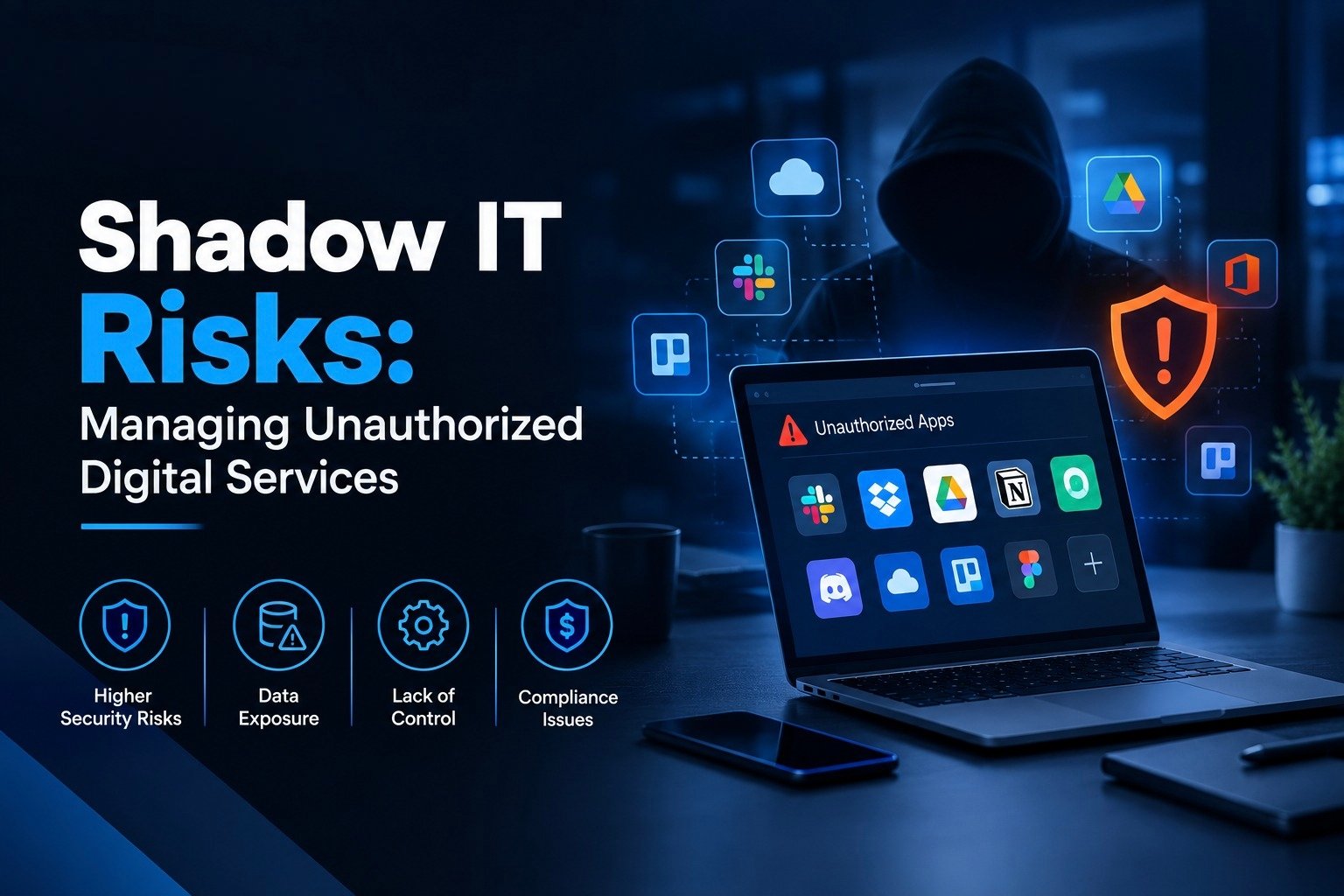
Shadow IT Risks: Managing Unauthorized Digital Services
Shadow IT refers to digital services, applications, cloud platforms, and tools used by employees without formal approval from the organization's IT or security team. While these services may improve productivity, they can also create security, privacy, and compliance risks.
What Is Shadow IT?
Shadow IT occurs when employees or teams use software, cloud applications, storage platforms, communication tools, or other digital services without proper authorization from the organization.
For example, an employee may use an unapproved file-sharing platform to store business documents or connect a third-party application to company data without security review.
As organizations increasingly rely on cloud-based technologies, controlling unauthorized digital services has become an important part of cybersecurity.
Why Shadow IT Creates Security Risks
Unauthorized services may not follow the organization's security standards. Security teams may also have limited visibility into how these platforms store, process, or share company information.
Common risks include:
- Unauthorized access to business data
- Exposure of sensitive information
- Weak authentication controls
- Unapproved third-party integrations
- Data leakage
- Compliance challenges
- Increased attack surface
Organizations can strengthen visibility and protection by implementing appropriate cloud security practices. Learn more at https://www.rashicore.com/cloud-security.php
Common Examples of Shadow IT
Shadow IT can appear in many forms, including:
Unapproved Cloud Storage
Employees may use personal or unauthorized cloud storage accounts to share company documents. This can make it difficult for security teams to monitor sensitive information.
Third-Party Applications
Teams may install applications or browser extensions without checking their security permissions. Some applications may request access to company files, accounts, or business information.
Personal Devices and Accounts
Using personal devices or accounts for business activities can make organizational data harder to control and monitor.
Unauthorized SaaS Platforms
Employees may create accounts on SaaS platforms to complete tasks quickly without going through the organization's approval process.
How Shadow IT Can Affect Cloud Security
Cloud environments can become difficult to secure when unauthorized applications and services are connected to business systems. Unknown integrations may create additional access points and make it harder to maintain consistent security policies.
A strong cloud security strategy should include visibility, access management, monitoring, and regular security reviews.
Organizations can explore cloud security solutions and practices at https://www.rashicore.com/cloud-security.php
How Organizations Can Manage Shadow IT
Managing Shadow IT does not necessarily mean blocking every unauthorized application. Instead, organizations should identify the services being used, understand their business purpose, and determine whether they meet security requirements.
1. Maintain Visibility
Security teams should maintain an updated inventory of cloud applications, services, and integrations being used across the organization.
2. Establish Clear Policies
Employees should understand which applications and services are approved and what procedures are required before using new platforms.
3. Monitor Cloud Activity
Continuous monitoring can help identify unusual access patterns, unauthorized applications, and potentially risky cloud activities.
4. Review Access Permissions
Organizations should regularly review application permissions and remove unnecessary access to business systems and sensitive information.
5. Educate Employees
Security awareness training can help employees understand the risks associated with unauthorized digital services and encourage them to follow approved processes.
Benefits of Effective Shadow IT Management
A structured approach to Shadow IT can help organizations:
- Improve visibility across digital services
- Reduce unauthorized access
- Protect sensitive business information
- Strengthen cloud security
- Improve compliance
- Reduce unnecessary attack surfaces
- Establish better technology governance
For organizations looking to strengthen protection across cloud environments, https://www.rashicore.com/cloud-security.php provides more information about cloud security.
Conclusion
Shadow IT can create security risks when unauthorized applications, cloud services, and digital platforms operate outside established security controls. Organizations should focus on discovering these services, evaluating their risks, controlling access, and educating employees.
By combining effective policies, continuous monitoring, employee awareness, and strong cloud security practices, businesses can reduce the risks associated with unauthorized digital services while still supporting productivity and innovation.
 UK
UK
 USA
USA
 UAE
UAE
 Canada
 Australia
 Germany
 Singapore
 Netherlands