
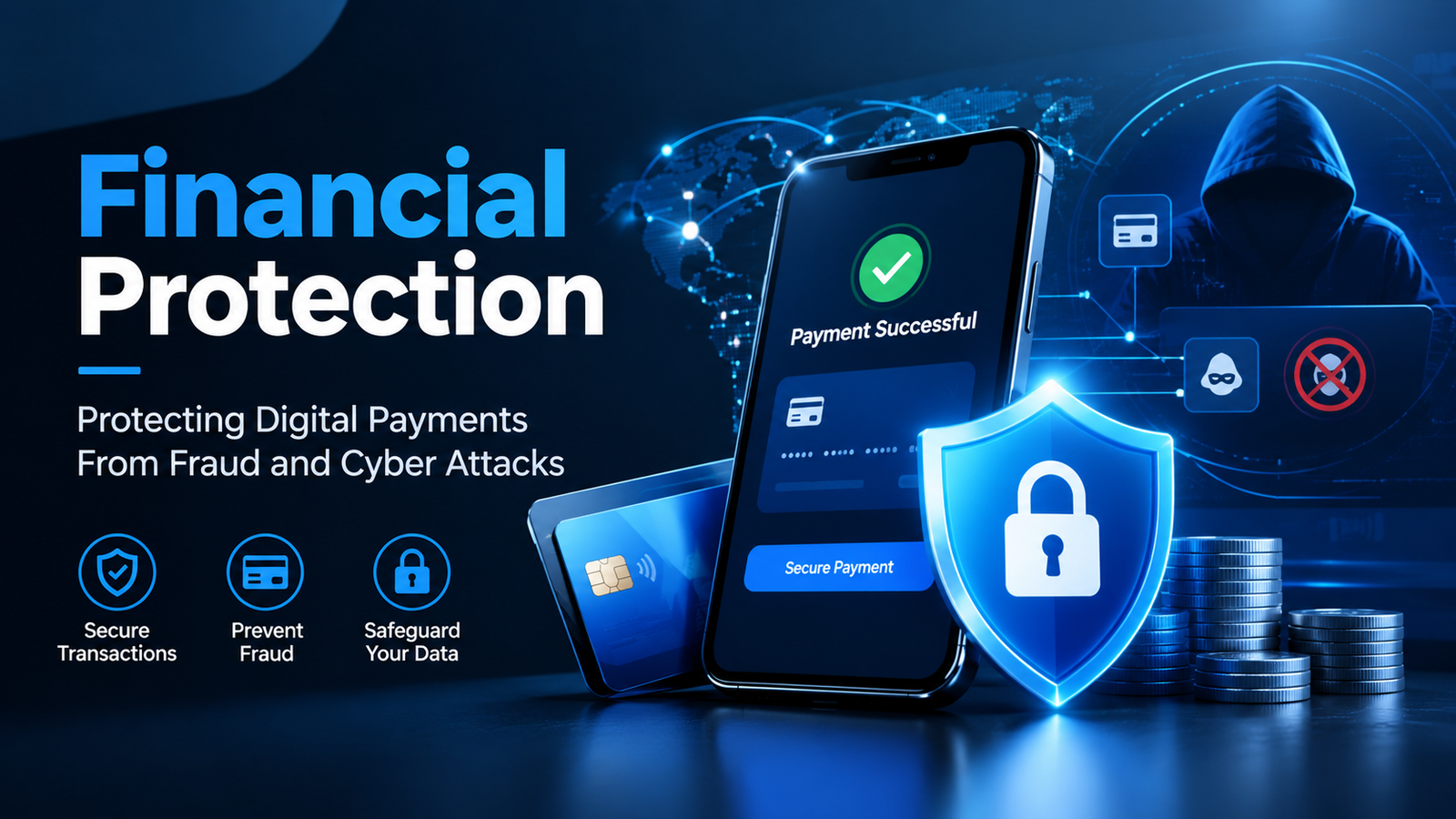
Financial Protection: Protecting Digital Payments From Fraud and Cyber Attacks
Introduction
Digital payments have transformed the way businesses and customers transfer money. From online banking and mobile wallets to card payments and payment gateways, financial transactions are now faster and more convenient. However, this growing digital ecosystem has also created new opportunities for fraudsters and cybercriminals.
Financial institutions and businesses must therefore implement strong financial protection measures to secure digital payments, prevent unauthorized transactions, and protect sensitive financial information.
How Cyber Attacks Affect Digital Payments
Attackers may target payment platforms, customer accounts, employee devices, or financial databases. Once they gain unauthorized access, they can attempt to modify transactions, steal payment information, or redirect funds.
Businesses should protect their financial infrastructure through multiple security layers. Strong authentication, encryption, access controls, transaction monitoring, and continuous security assessment can help reduce the risk of financial cyber attacks.
Best Practices for Financial Protection
1. Use Multi-Factor Authentication
Multi-factor authentication adds an additional security layer by requiring users to verify their identity through more than one method.
2. Encrypt Financial Information
Encryption helps protect sensitive payment and financial data while it is being stored or transferred between systems.
3. Monitor Transactions
Real-time transaction monitoring can help identify unusual payment behavior, suspicious transfers, and potential fraud before significant losses occur.
4. Strengthen Access Controls
Businesses should follow the principle of least privilege and ensure employees only have access to the financial systems and information required for their responsibilities.
5. Maintain Secure Backups
Reliable backups can help organizations recover important financial and business information following ransomware, system failures, or other cyber incidents. Rashicore's Finance Security solutions help organizations strengthen protection for financial environments and digital assets. Learn more at https://www.rashicore.com/finance.php.
Role of Cybersecurity in Digital Payments
Cybersecurity should be integrated into every stage of the digital payment process. Regular vulnerability assessments, security monitoring, employee awareness training, and incident response planning can help businesses identify weaknesses before attackers exploit them.
Rashicore provides dedicated financial security solutions designed to help protect critical financial systems against evolving cyber threats. Explore the service at https://www.rashicore.com/finance.php.
Conclusion
As digital payments continue to grow, protecting financial transactions from fraud and cyber attacks has become essential for businesses of every size. Strong authentication, encryption, transaction monitoring, access management, employee awareness, and secure backups can help reduce financial security risks.
A proactive cybersecurity strategy allows organizations to protect sensitive financial information, maintain customer trust, and support secure digital payment operations. Businesses can strengthen their financial cybersecurity approach with Rashicore's Finance Security services at https://www.rashicore.com/finance.php.
 UK
UK
 USA
USA
 UAE
UAE
 Canada
 Australia
 Germany
 Singapore
 Netherlands