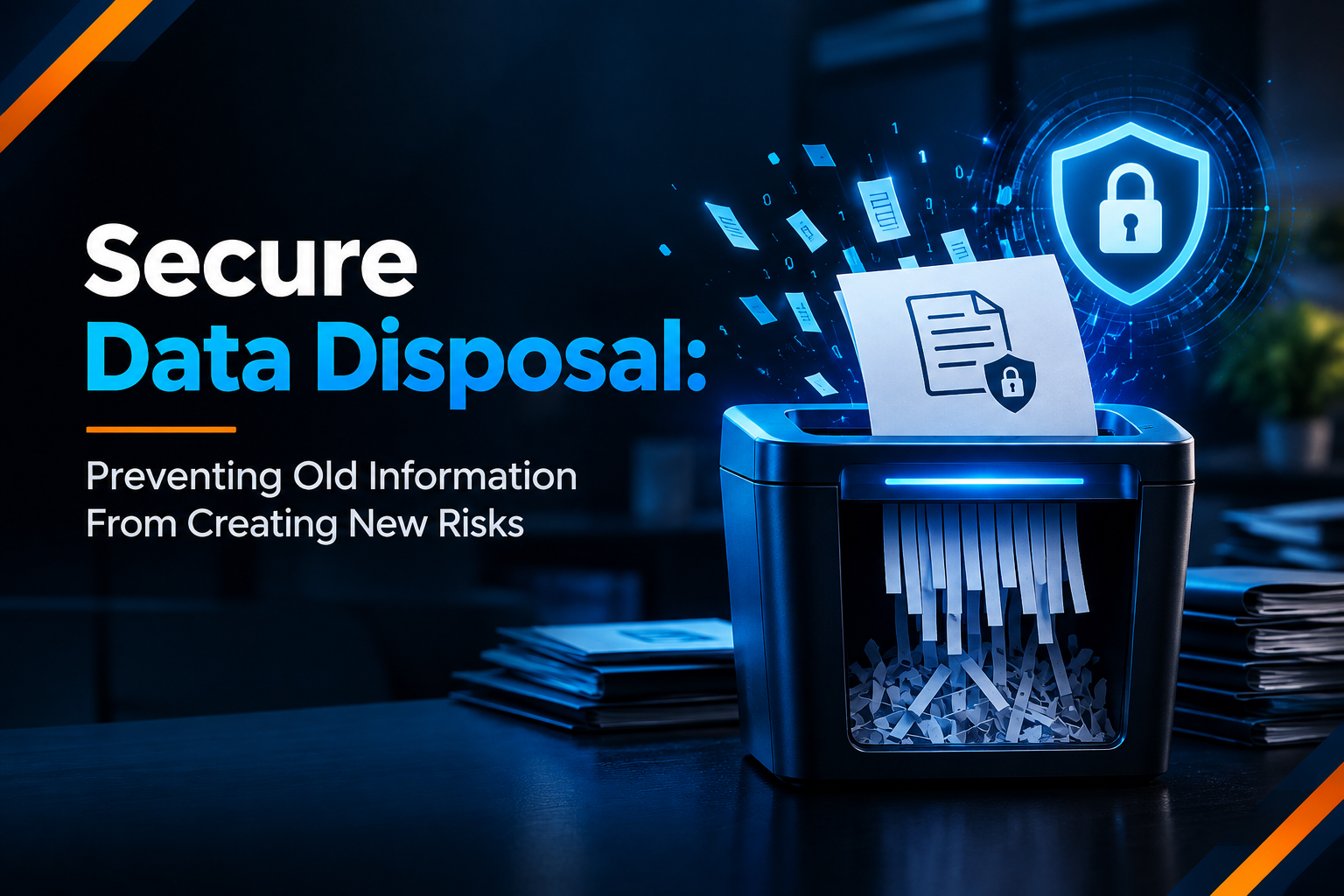
Secure Data Disposal: Preventing Old Information From Creating New Risks
Introduction
Data is an important asset for every organization, but not all information needs to be stored forever. Old customer records, outdated business documents, unused files, and retired devices can create serious security risks if they are not properly managed and disposed of.
Secure data disposal is an essential part of data lifecycle management. When outdated information is deleted or destroyed securely, businesses can reduce the risk of data breaches, unauthorized access, and information misuse.
Why Secure Data Disposal Is Important
Many organizations focus on protecting active data but overlook information that is no longer required. Old data stored on servers, computers, cloud platforms, and storage devices can still become a target for cybercriminals.
Improperly disposed data may expose sensitive customer information, financial records, login credentials, and confidential business details. A proper data disposal strategy helps ensure that unnecessary information does not create new cybersecurity risks.
Learn more about protecting sensitive business information:
https://www.rashicore.com/data-protection.php
Identify Data That Is No Longer Required
The first step in secure data disposal is identifying information that has reached the end of its lifecycle. Organizations should regularly review stored data and determine which files, records, and systems are no longer needed.
However, businesses should also consider legal, regulatory, and compliance requirements before deleting important information. A clear data retention policy can help organizations decide how long different types of data should be stored.
Use Secure Data Deletion Methods
Simply deleting a file does not always mean the information is permanently removed. In some cases, deleted data may still be recovered from storage devices.
Organizations should use secure deletion methods to ensure sensitive information cannot be accessed or recovered. This may include secure wiping, encryption management, and approved data destruction processes.
A strong data protection strategy can help businesses manage sensitive information throughout its lifecycle:
https://www.rashicore.com/data-protection.php
Dispose of Old Devices Securely
Computers, hard drives, servers, and other storage devices may contain confidential information even after they are no longer in use. Before disposing of or replacing old devices, organizations should ensure that all sensitive data has been securely removed.
Proper device disposal helps prevent old hardware from becoming a source of data leakage or unauthorized access.
Reduce Risks Through Regular Data Management
Regular data reviews can help businesses reduce unnecessary storage and identify outdated information. By managing data throughout its lifecycle, organizations can improve security and reduce the amount of sensitive information exposed to potential threats.
Secure data management also supports better compliance, improves operational efficiency, and helps organizations maintain greater control over their information.
For more information about data security and protection services, visit:
https://www.rashicore.com/data-protection.php
Conclusion
Secure data disposal is an important part of effective data lifecycle management. Old and unnecessary information can still create significant cybersecurity risks if it is not properly deleted or destroyed.
By identifying outdated data, using secure deletion methods, disposing of old devices safely, and following strong data protection practices, organizations can reduce the risk of data breaches and unauthorized access. Managing data securely from creation to disposal helps businesses protect valuable information and build a stronger cybersecurity environment.
 UK
UK
 USA
USA
 UAE
UAE
 Canada
 Australia
 Germany
 Singapore
 Netherlands