
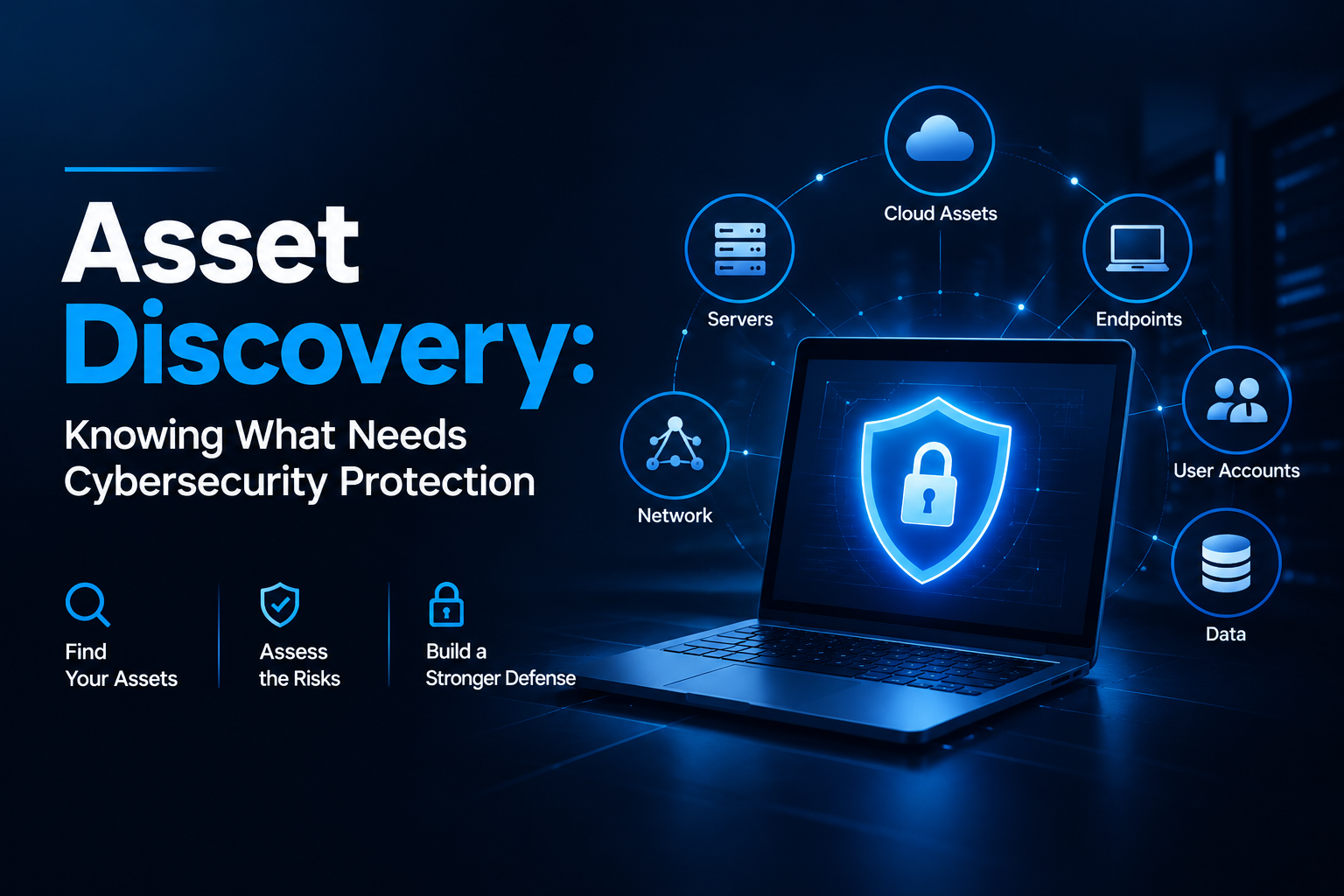
Asset Discovery: Knowing What Needs Cybersecurity Protection
Organizations cannot effectively protect systems they do not know they have. Asset discovery helps businesses identify websites, applications, servers, cloud resources, endpoints, networks, and other digital assets that may introduce cybersecurity risks.
What Is Asset Discovery?
Asset discovery is the process of identifying and maintaining visibility into the digital assets connected to an organization's IT environment. These assets can include websites, applications, servers, databases, cloud resources, APIs, employee devices, and network infrastructure.
Without accurate asset visibility, security teams may overlook unknown, outdated, or exposed systems that attackers could target.
Why Asset Visibility Matters
As businesses expand their digital infrastructure, new systems and services are frequently added. Temporary servers, cloud applications, third-party platforms, and forgotten domains can remain active without proper security monitoring.
Effective asset discovery helps organizations:
- Identify known and unknown digital assets
- Detect exposed systems and services
- Reduce unnecessary attack paths
- Prioritize important assets for security testing
- Improve vulnerability management
- Strengthen overall security visibility
Connecting Asset Discovery With Security Testing
Finding an asset is only the first step. Organizations should also evaluate whether those assets contain vulnerabilities or security weaknesses.
Vulnerability Assessment and Penetration Testing (VAPT) can help identify weaknesses across systems, applications, and networks. Regular testing allows organizations to discover vulnerabilities before attackers can exploit them.
For professional security testing, explore: https://www.rashicore.com/vapt.php
Common Assets That Need Protection
Organizations should maintain visibility across different types of assets, including:
Web Applications
Websites and online applications may contain vulnerabilities that could expose customer or business information.
Cloud Resources
Cloud servers, storage systems, APIs, and applications should be monitored to identify misconfigurations and unnecessary exposure.
Network Infrastructure
Routers, firewalls, servers, and other network-connected systems can create additional attack paths if they are not properly secured.
Endpoints
Laptops, desktops, mobile devices, and other endpoints can become entry points for attackers.
Benefits of Regular Asset Discovery
Continuous asset discovery helps security teams maintain an updated view of their technology environment. It can also support better vulnerability prioritization and security testing.
When newly discovered assets are assessed through appropriate security testing, organizations can identify weaknesses earlier and take corrective action.
Businesses looking to identify and address security weaknesses can learn more about VAPT here: https://www.rashicore.com/vapt.php
Best Practices for Asset Visibility
Organizations should regularly:
- Maintain an updated inventory of digital assets.
- Identify unknown or unauthorized systems.
- Monitor newly deployed cloud resources and applications.
- Review exposed services and network endpoints.
- Prioritize critical assets for vulnerability testing.
- Retest systems after major changes or remediation.
- Continuously monitor the environment for newly exposed assets.
Regular vulnerability assessments and penetration testing can provide additional insight into the security condition of discovered assets. More information is available at: https://www.rashicore.com/vapt.php
Conclusion
Asset discovery is an important foundation of modern cybersecurity. Organizations need to know what systems, applications, networks, and digital resources they own or operate before they can effectively protect them.
By combining continuous asset visibility with vulnerability assessment and penetration testing, businesses can identify security weaknesses, prioritize risks, and reduce potential attack paths before cybercriminals exploit them.
 UK
UK
 USA
USA
 UAE
UAE
 Canada
 Australia
 Germany
 Singapore
 Netherlands