Ransomware Protection: Strategies to Prevent Costly Attacks
Introduction
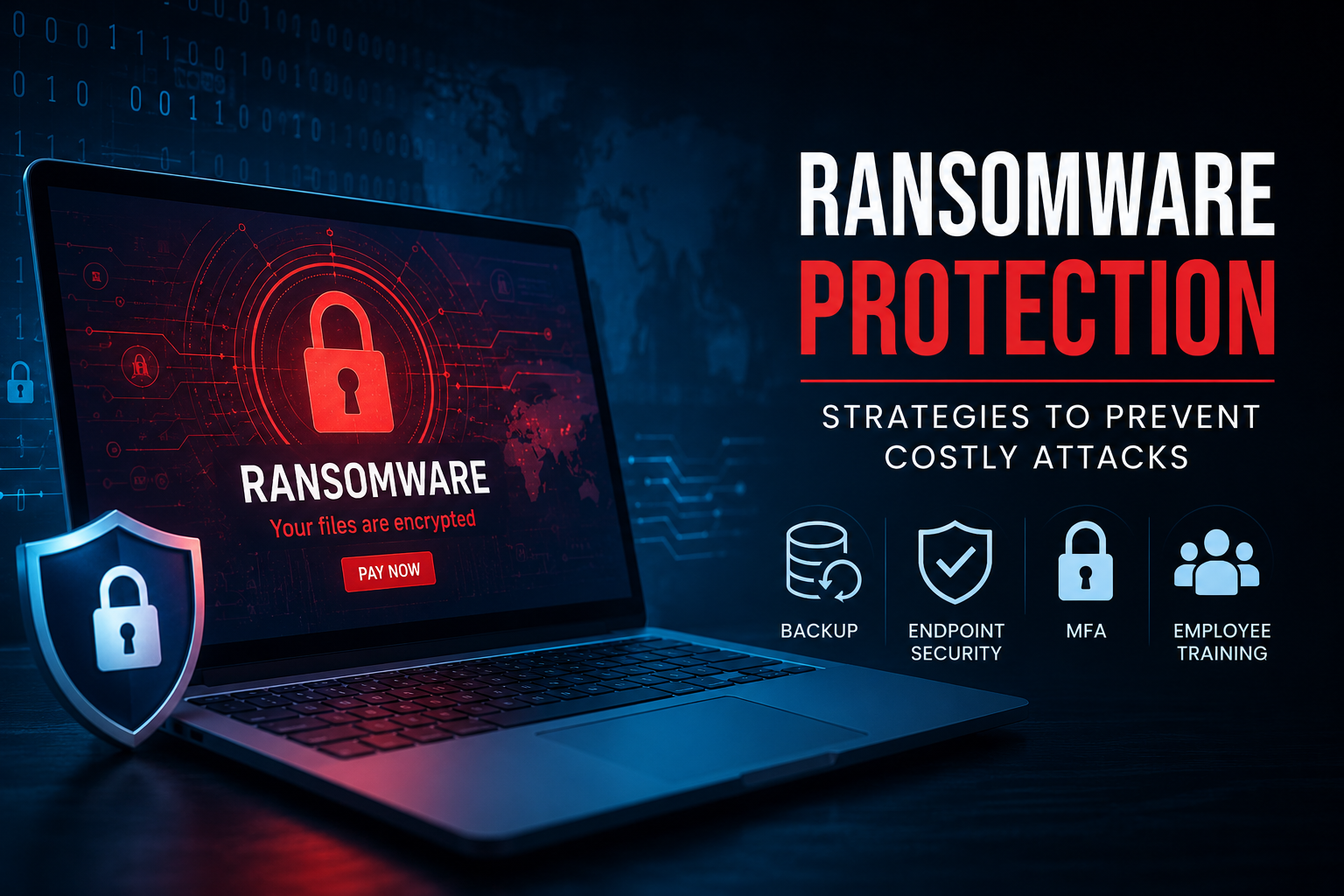
Ransomware is a type of malware that encrypts files and demands payment to restore access. It can cause data loss, financial damage, and business downtime. Implementing strong cybersecurity practices is essential to reduce the risk of ransomware attacks.
Top Strategies to Prevent Ransomware
1. Keep Software Updated
Regularly install security patches for operating systems and applications to fix vulnerabilities.
2. Use Multi-Factor Authentication (MFA)
Enable MFA for email, cloud services, and remote access to prevent unauthorized logins.
3. Back Up Your Data
Maintain regular backups and store at least one copy offline or in secure cloud storage.
4. Train Employees
Educate staff to identify phishing emails, suspicious links, and malicious attachments.
5. Deploy Endpoint Security
Use antivirus, Endpoint Detection and Response (EDR), and firewalls to detect and stop threats.
6. Limit User Access
Follow the principle of least privilege by giving users only the permissions they need.
What to Do During an Attack
- Disconnect infected devices from the network.
- Report the incident to your IT/security team.
- Restore data from clean backups.
- Investigate the attack before reconnecting systems.
Conclusion
Ransomware attacks are becoming more advanced, but they can be prevented with regular updates, strong authentication, reliable backups, employee awareness, and continuous security monitoring. A proactive security strategy helps protect your data, operations, and business reputation.
 UK
UK
 USA
USA
 UAE
UAE
 Canada
 Australia
 Germany
 Singapore
 Netherlands