
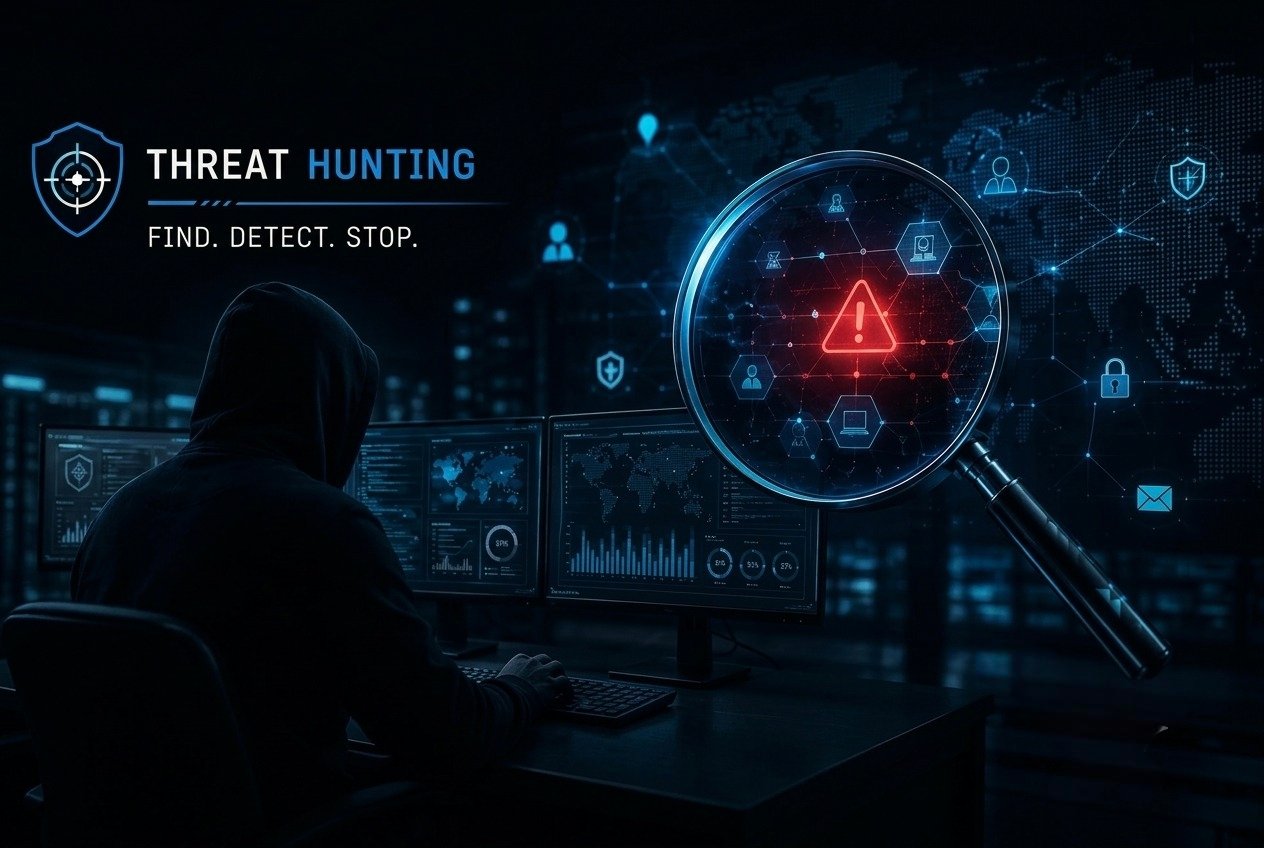
Threat Hunting: Searching for Hidden Signs of Compromise
Introduction
Cybersecurity threats are becoming increasingly advanced, and traditional security tools may not always detect every malicious activity. Cybercriminals can sometimes remain hidden inside a network for long periods, collecting information, moving between systems, or preparing for a larger attack.
Threat hunting is a proactive cybersecurity approach that focuses on searching for hidden signs of compromise before they develop into serious security incidents. Instead of waiting for an automated security alert, security teams actively investigate systems, networks, and user activity to identify suspicious behavior.
https://www.rashicore.com/itsoftware.php
What Is Threat Hunting?
Threat hunting is the process of proactively searching for potential cyber threats that may have bypassed traditional security controls. Security professionals analyze logs, network activity, endpoints, user behavior, and other security data to identify unusual patterns.
The goal is to discover hidden attackers and suspicious activity as early as possible. This proactive approach can help organizations reduce the time attackers remain inside their systems.
Why Is Threat Hunting Important?
Many cyberattacks do not immediately trigger a security alert. Attackers may use legitimate credentials, trusted tools, or normal-looking activities to avoid detection.
Threat hunting helps organizations identify indicators such as:
Unusual login activity
Suspicious network connections
Unexpected changes to user accounts
Abnormal file activity
Unauthorized access attempts
Unusual behavior on endpoints
By investigating these signs early, organizations can prevent a potential compromise from becoming a major security incident.
Key Steps in the Threat Hunting Process
1. Develop a Threat Hypothesis
Threat hunters often begin with a hypothesis based on known attack techniques, unusual activity, or intelligence about emerging cyber threats. This helps security teams focus their investigation on potential areas of risk.
2. Collect and Analyze Security Data
Security logs, endpoint activity, network traffic, and authentication records can provide valuable information during a threat hunting investigation. Analysts look for patterns that may indicate malicious behavior.
Organizations can strengthen their IT and software security practices by implementing proactive security monitoring and assessment strategies.
https://www.rashicore.com/itsoftware.php
3. Investigate Suspicious Activity
When unusual behavior is discovered, security teams investigate the activity to determine whether it is a genuine threat. This may include reviewing affected systems, user accounts, network connections, and other relevant evidence.
The Role of Proactive Defense
Proactive defense focuses on identifying and reducing cybersecurity risks before they cause significant damage. Threat hunting is an important part of this strategy because it helps organizations actively search for attackers who may already be present within their environment.
Rather than relying only on automated alerts, businesses can use proactive threat detection to improve visibility and respond to suspicious activity more effectively.
https://www.rashicore.com/itsoftware.php
Conclusion
Threat hunting plays an important role in modern cybersecurity by helping organizations search for hidden signs of compromise before attackers can cause serious damage. By analyzing security data, investigating suspicious activity, and responding quickly to confirmed threats, businesses can improve their overall security posture.
A proactive defense strategy that includes continuous monitoring and threat hunting can help organizations detect advanced threats earlier, reduce attacker dwell time, and better protect critical systems and digital assets.
 UK
UK
 USA
USA
 UAE
UAE
 Canada
 Australia
 Germany
 Singapore
 Netherlands