
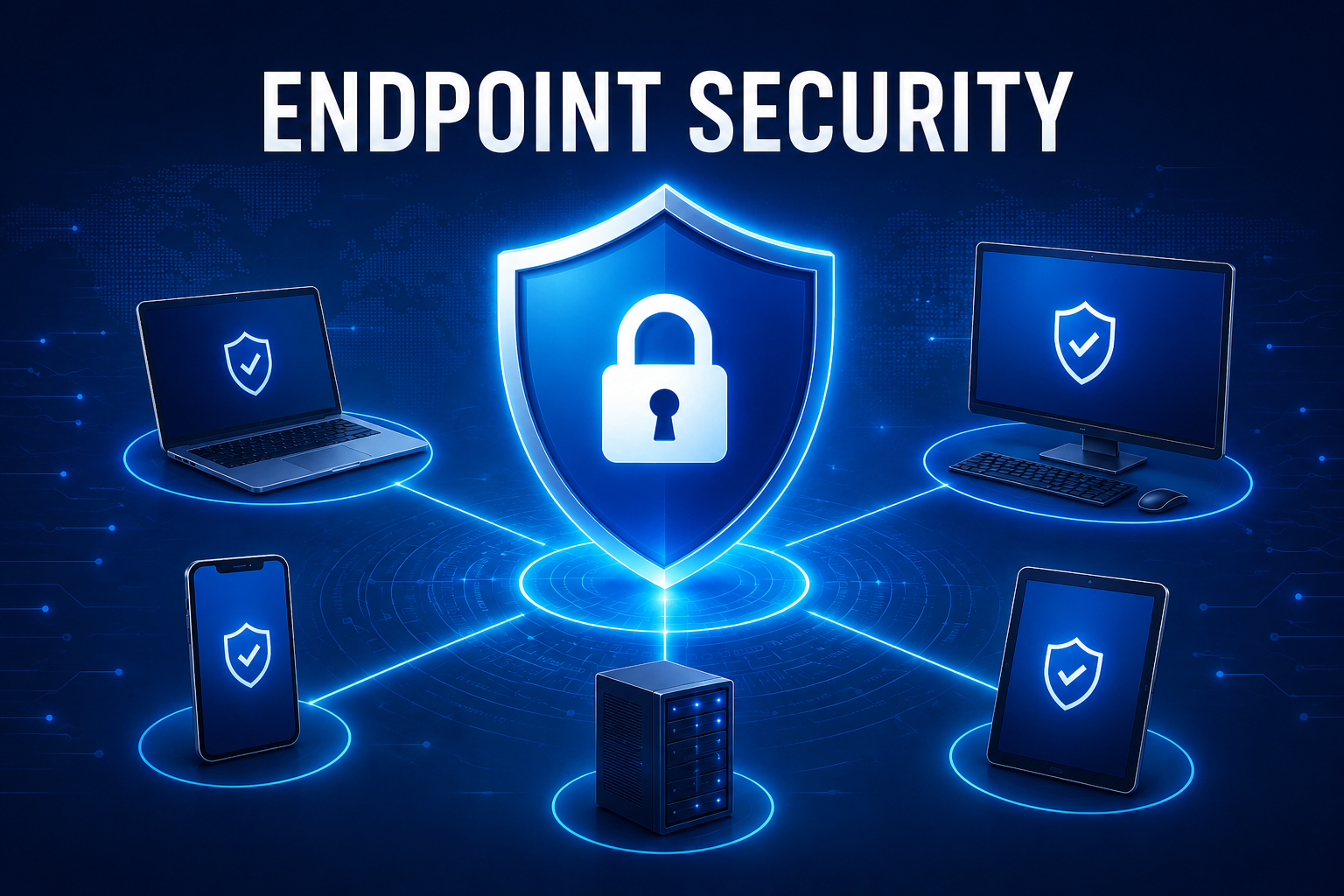
Endpoint Security: Protecting Every Device From Cyber Defense
Introduction
As businesses increasingly rely on laptops, desktops, smartphones, servers, and IoT devices, protecting every endpoint has become a critical part of cybersecurity. Each connected device can serve as an entry point for cybercriminals if left unprotected. Endpoint security helps safeguard these devices against malware, ransomware, phishing attacks, and unauthorized access, ensuring that sensitive business data remains secure.
Why Endpoint Security Matters
Modern organizations operate in hybrid and remote work environments where employees access company resources from multiple devices and locations. Without proper endpoint protection, a single compromised device can put the entire network at risk. Endpoint security reduces cyber risks, protects confidential information, improves productivity, and helps organizations meet industry compliance requirements.
Common Endpoint Security Threats
1. Malware Attacks
Malicious software such as viruses, worms, spyware, and trojans can steal data, damage systems, and disrupt business operations.
2. Ransomware
Ransomware encrypts files and demands payment for their release. Endpoint protection helps identify and block ransomware before it spreads.
3. Phishing Attacks
Employees may unknowingly click malicious links or attachments, allowing attackers to compromise devices and steal credentials.
4. Zero-Day Exploits
These attacks target previously unknown software vulnerabilities before security patches become available.
5. Insider Threats
Employees or contractors may intentionally or accidentally expose sensitive information, making endpoint monitoring essential.
6. Fileless Malware
Unlike traditional malware, fileless attacks operate directly in system memory, making advanced behavioral detection crucial.
Key Features of Endpoint Security
- Real-Time Threat Detection: Monitors devices continuously to identify and stop suspicious activities.
- Endpoint Detection and Response (EDR): Detects, investigates, and responds to advanced cyber threats.
- AI-Powered Protection: Uses artificial intelligence to recognize both known and emerging threats.
- Data Encryption: Protects sensitive information stored on devices from unauthorized access.
- Automatic Patch Management: Keeps operating systems and applications updated to reduce security vulnerabilities.
Benefits of Endpoint Security
Implementing endpoint security helps businesses prevent cyberattacks, minimize downtime, secure remote employees, and improve overall network security. It also enhances visibility across connected devices, allowing IT teams to respond quickly to incidents before they escalate.
Best Practices for Endpoint Security
- Deploy endpoint protection on every device
- Keep operating systems and applications updated
- Enable multi-factor authentication (MFA)
- Conduct regular employee cybersecurity awareness training
- Monitor endpoint activity continuously
- Implement Zero Trust security principles
- Encrypt sensitive data
- Perform regular vulnerability assessments
- Maintain secure backup and disaster recovery plans
Conclusion
Endpoint security is a vital component of a strong cybersecurity strategy. By protecting every connected device with advanced security solutions, businesses can reduce cyber risks, safeguard critical data, and ensure uninterrupted operations in today's evolving digital landscape.
 UK
UK
 USA
USA
 UAE
UAE
 Canada
 Australia
 Germany
 Singapore
 Netherlands