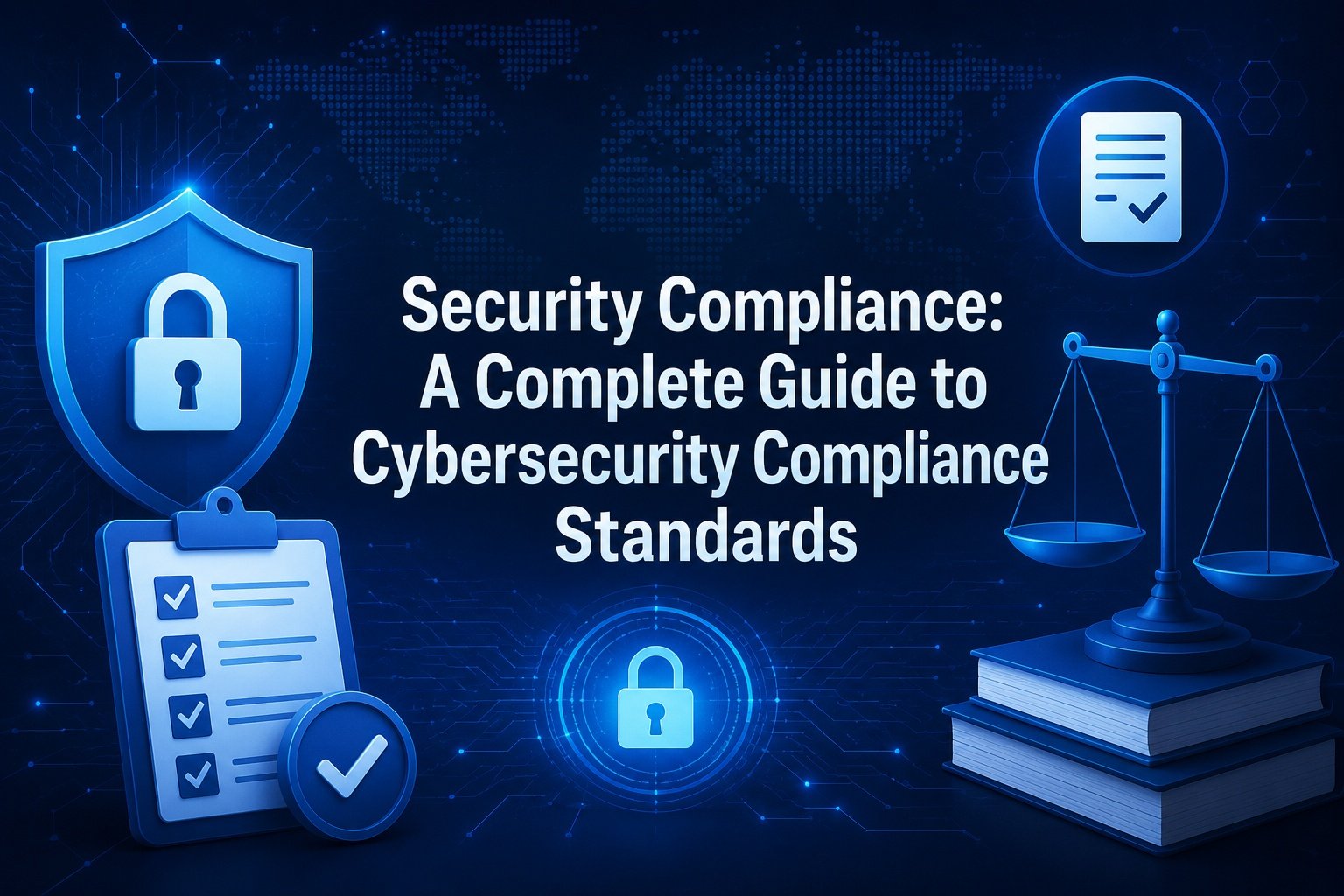
Security Compliance: A Complete Guide to Cybersecurity Compliance Standards
Introduction
In today’s digital landscape, businesses handle large amounts of sensitive information, making security compliance an essential part of cybersecurity. Security compliance helps organizations protect data, reduce cyber risks, and meet industry and regulatory requirements.
What Is Security Compliance?
Security compliance is the process of following established cybersecurity laws, regulations, standards, and security requirements. It includes practices such as data protection, access control, risk management, security monitoring, vulnerability management, and incident response.
Why Is Security Compliance Important?
A strong compliance strategy helps organizations:
- Protect sensitive business and customer data
- Reduce cybersecurity risks
- Meet regulatory and industry requirements
- Improve security processes
- Build customer trust
- Respond effectively to security incidents
Major Cybersecurity Compliance Standards
ISO 27001
ISO/IEC 27001 provides a structured framework for managing information security through an Information Security Management System (ISMS). It focuses on risk management, access control, data protection, and continuous improvement.
SOC 2
SOC 2 is commonly used by technology and service organizations to demonstrate effective controls for protecting customer information. It focuses on areas such as security, availability, confidentiality, and privacy.
PCI DSS
PCI DSS applies to organizations that process, store, or transmit payment card information. It provides requirements for protecting cardholder data and reducing payment-related security risks.
HIPAA
HIPAA establishes security and privacy requirements for protected health information in the United States. It helps healthcare organizations safeguard sensitive patient information.
GDPR
GDPR focuses on protecting personal data and privacy. Organizations handling applicable personal data must implement appropriate security measures and follow data protection principles.
NIST Cybersecurity Framework
The NIST Cybersecurity Framework helps organizations manage cybersecurity risks through five key functions:
Identify, Protect, Detect, Respond, and Recover.
Key Elements of a Compliance Program
An effective security compliance program should include:
- Regular risk assessments
- Strong access controls
- Data encryption and protection
- Vulnerability management
- Security monitoring
- Incident response plans
- Employee security awareness training
- Regular audits and documentation
How to Maintain Security Compliance
Organizations should first identify the regulations and standards that apply to their business. They can then assess existing security controls, identify gaps, implement necessary improvements, and regularly monitor their systems.
Security policies should be reviewed periodically, employees should receive security training, and compliance controls should be tested regularly.
Conclusion
Security compliance is an ongoing process that supports both regulatory requirements and overall cybersecurity. Standards such as ISO 27001, SOC 2, PCI DSS, HIPAA, GDPR, and NIST provide organizations with structured approaches to protecting information and managing cyber risks.
By maintaining strong security controls and continuously improving compliance processes, businesses can protect sensitive data, reduce vulnerabilities, and build greater trust with customers and partners
 UK
UK
 USA
USA
 UAE
UAE
 Canada
 Australia
 Germany
 Singapore
 Netherlands