
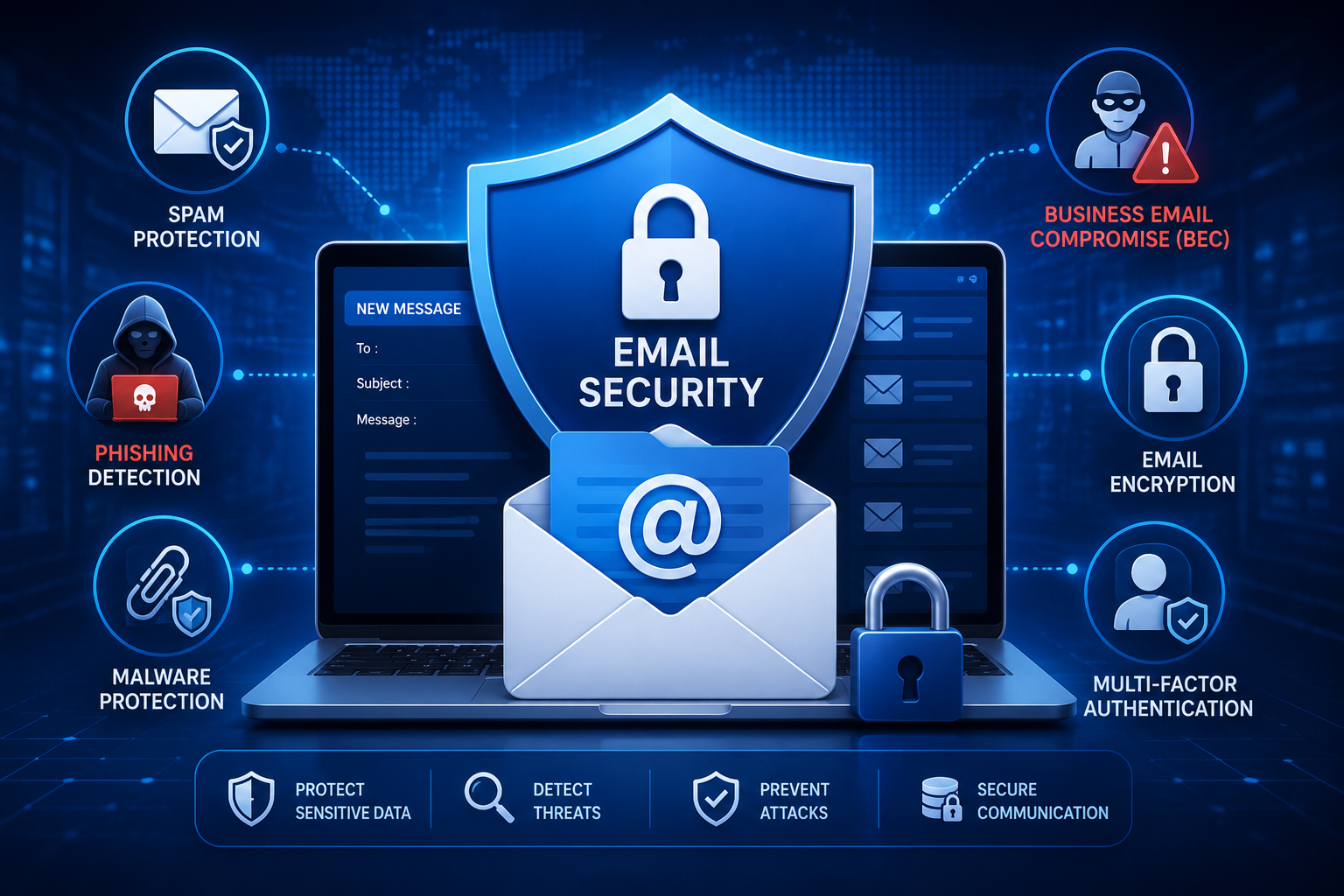
Email Security: Preventing Phishing and Business Email Compromise
Introduction
Email security is one of the most important aspects of cybersecurity. Cybercriminals use phishing emails, malware, ransomware, and Business Email Compromise (BEC) attacks to steal sensitive information and financial data. Implementing strong email protection helps individuals and organizations secure their communications and prevent cyber threats.
What is Email Security?
Email Security is the process of protecting email accounts, messages, and communication systems from cyber threats such as phishing, malware, spam, ransomware, and unauthorized access.
It ensures:
- Secure email communication
- Protection from phishing attacks
- Prevention of malware infections
- Safe sharing of confidential information
Why Email Security is Important
Without proper email protection, organizations risk data breaches, financial fraud, and identity theft.
Key Reasons:
- Protect confidential business information
- Prevent phishing and email scams
- Reduce malware infections
- Secure employee communication
- Improve business continuity
In 2026, email remains the primary target for cybercriminals, making email security more important than ever.
Types of Email Security
1. Spam Filtering
Blocks unwanted and suspicious emails before they reach your inbox.
2. Anti-Phishing Protection
Detects fake emails designed to steal usernames, passwords, and financial information.
3. Email Encryption
Encrypts email content to keep sensitive information private.
4. Malware Protection
Scans email attachments and links for viruses and malicious software.
5. Multi-Factor Authentication (MFA)
Adds an extra layer of security to email accounts.
Common Email Security Threats
- Phishing – Fake emails that steal login credentials.
- Business Email Compromise (BEC) – Fraudsters impersonate executives or employees.
- Spam Emails – Unwanted emails containing malicious links.
- Malware Attachments – Infected files that install malicious software.
Ransomware – Encrypts important business data after opening infected emails.
Future of Email Security
Artificial Intelligence and Machine Learning are improving email protection by detecting phishing attempts, suspicious attachments, and fraudulent emails in real time. Zero Trust Security and advanced email authentication technologies like SPF, DKIM, and DMARC are becoming industry standards.
Conclusion
Email security is essential for protecting sensitive information and preventing phishing, malware, and Business Email Compromise attacks. By implementing modern email protection solutions and following security best practices, businesses and individuals can significantly reduce cyber risks.
 UK
UK
 USA
USA
 UAE
UAE
 Canada
 Australia
 Germany
 Singapore
 Netherlands