
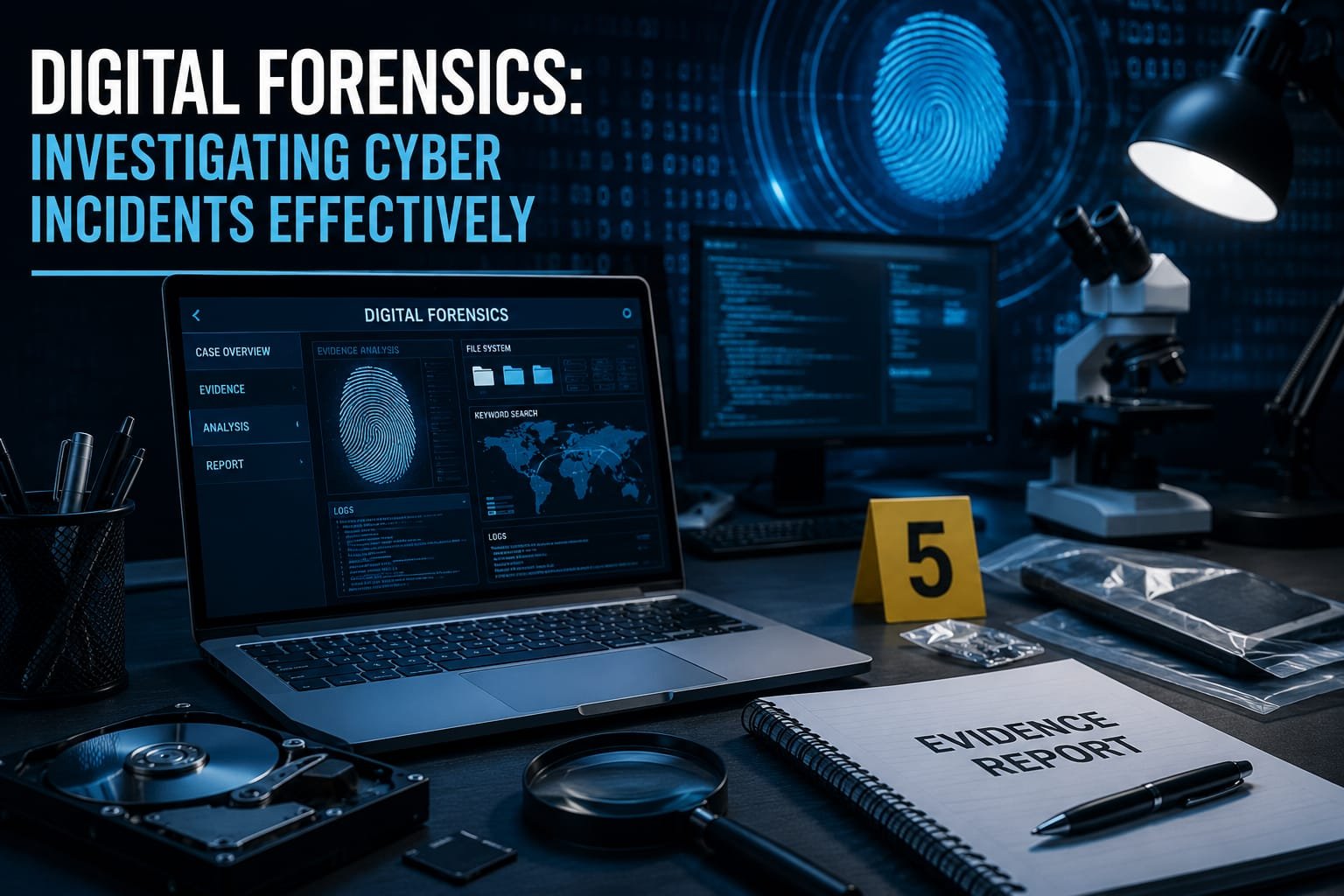
Digital Forensic: Investigating Cyber Incidents Effectively
Introduction
As cyber threats continue to evolve, organizations need effective ways to investigate and recover from security incidents. Digital forensics plays a critical role in identifying the source of cyberattacks, preserving digital evidence, and helping businesses strengthen their cybersecurity defenses.
What is Digital Forensics?
Digital forensics is the process of collecting, preserving, analyzing, and presenting digital evidence from computers, mobile devices, servers, and networks. It enables organizations to determine how a cyber incident occurred while ensuring the integrity of the evidence.
Key Steps in a Digital Forensics Investigation
1. Evidence Collection
The first step involves securely collecting digital evidence from affected systems without modifying or damaging the original data.
2. Data Analysis
Forensic specialists analyze logs, files, emails, network traffic, and malware to identify the attack method, affected systems, and the attacker's activities.
3. Evidence Preservation
Maintaining the integrity of digital evidence is essential. Proper documentation and a secure chain of custody ensure that evidence remains reliable for legal and compliance purposes.
4. Reporting and Remediation
A detailed forensic report explains the cause of the incident, the impact, and recommendations to improve security and prevent future cyberattacks.
Benefits of Digital Forensics
- Identifies the root cause of cyber incidents.
- Supports legal investigations and regulatory compliance.
- Helps recover lost or compromised data.
- Strengthens incident response and security strategies.
- Prevents similar attacks through actionable insights.
Common Digital Forensics Applications
Digital forensics is widely used for investigating ransomware attacks, phishing campaigns, insider threats, data breaches, financial fraud, malware infections, and unauthorized system access.
Conclusion
Digital forensics is an essential component of modern cybersecurity. By investigating cyber incidents effectively, organizations can minimize damage, recover critical evidence, improve incident response, and build stronger defenses against future cyber threats. Investing in digital forensic expertise ensures faster recovery, better security, and long-term business resilience.
 UK
UK
 USA
USA
 UAE
UAE
 Canada
 Australia
 Germany
 Singapore
 Netherlands